
Last Updated: October 30, 2026
Quick Summary
Menstrual care for people with disabilities means managing periods with products, routines, and support that fit a person’s body, mobility, sensory needs, and level of independence. Start by asking whether the person can reach and grip the product, tell when it needs changing, and manage it in the bathroom they actually use. Pads and period underwear require no internal insertion, which often makes them the deciding choice.
- Pre-open a few pads at the start of the day and stack them within reach if wrappers are the hardest step.
- Never rush a transfer to save time on a change; a fall in the bathroom is far worse than a delayed swap.
- High-capacity products and period underwear stretch time between changes, which means fewer risky transfers.
- Fragrance-free, seamless products and quiet wrappers reduce sensory distress during a cycle.
- Ask your care team for an occupational therapy assessment if transfers have become harder or you have had a near-fall.
Table of Contents
- Why Menstrual Care for People With Disabilities Needs a Different Approach
- Choosing Accessible Period Products for Different Needs
- Period Care for Wheelchair Users: Changing, Transfers, and Safety
- Building an Adaptive Menstrual Care Routine
- Menstrual Care for Caregivers: Privacy, Consent, and Autonomy
- Teaching Menstrual Care to Young People With Disabilities
- Managing Period Pain, Heavy Flow, and When to Seek Clinical Advice
- Access, Affordability, and Disposal: Making Period Care Sustainable
- What matters most when building a plan
- Frequently Asked Questions
Why Menstrual Care for People With Disabilities Needs a Different Approach
Menstrual care for people with disabilities is the practice of managing periods with products, routines, and support that fit a person’s body, mobility, sensory needs, and level of independence.
At EVE, readers tell us they have spent years improvising because no guide spoke to their situation: a wheelchair user who cannot reach the dispenser, a parent supporting a daughter with a developmental disability, a woman with arthritis who dreads every change.
Below, we cover product choices, safe routines, caregiver boundaries, and when to call a clinician.
Choosing Accessible Period Products for Different Needs
Accessible period products are items a person can use, change, and dispose of with their own hands or with the support they actually have. That definition changes everything about product selection.
Start by asking three questions:
- Can the person reach and grip the product?
- Can they tell when it needs changing?
- Can they manage it in the space they actually use?
If you are comparing product types before choosing, our guide to pads, tampons, and menstrual cups lays out the differences in plain terms.
Match the product to the actual barrier
Most product guides stop at “pads are easier,” which is not specific enough to act on. This table maps common barriers to the features that solve them.
| Barrier | What makes it hard | Product features that help |
|---|---|---|
| Limited reach or one-handed use | Cannot position a pad or reach the perineum | Winged pads with a long adhesive strip; pull-on period underwear; pads with a tab handle |
| Tremor or low grip strength | Cannot peel wrappers or press adhesive | Pre-opened pads stored flat; underwear instead of adhesive; larger grip tabs |
| Catheter or suprapubic device | Internal products are unsafe or uncomfortable | External pads; period underwear with a low waistband that clears tubing |
| Limited trunk control | Cannot lean forward to check flow | High-capacity products; moisture-wicking liners; a mirror on a flexible arm |
| Sensory sensitivity | Wetness, seams, scent, and sound are distressing | Fragrance-free, dye-free products; seamless underwear; quiet wrappers |
| Skin fragility or pressure injury risk | Adhesive and tight elastic can damage skin | Soft-backed pads; loose, breathable underwear; fragrance-free wipes |
Pads, Period Underwear, and Reusable Options
Pads and period underwear win on one measure that matters more than any other: they require no internal insertion.
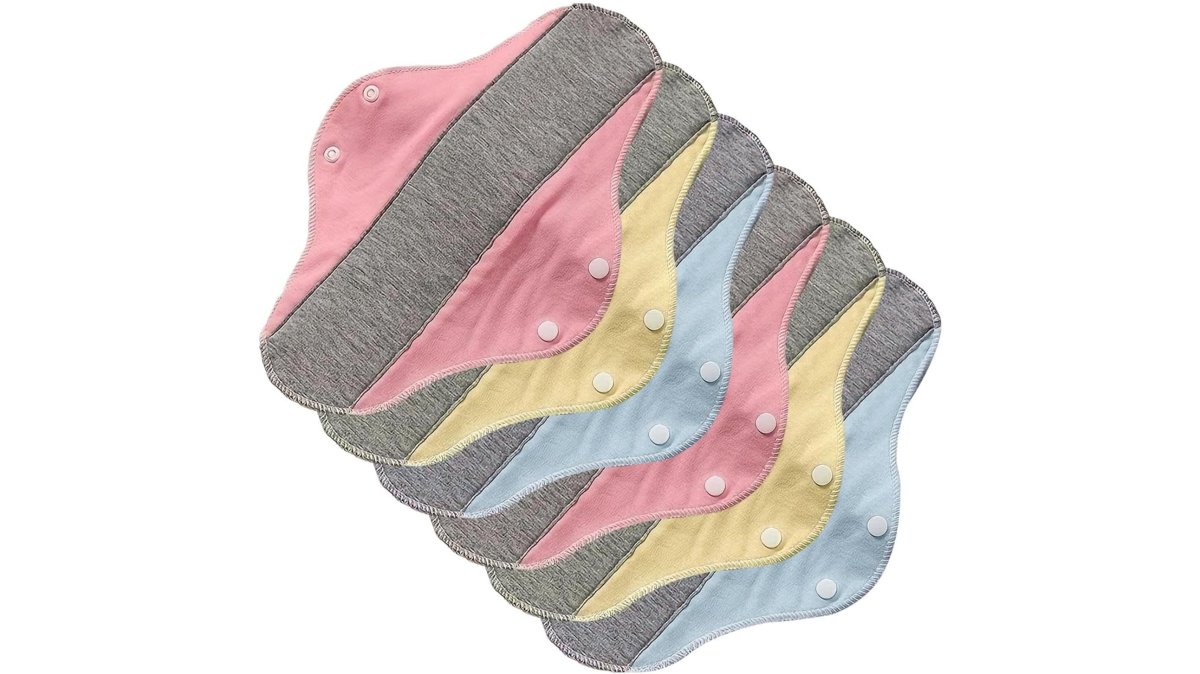
Reusable cloth pads snap into place and can be changed sitting down.
Our reusable washable cotton cloth pad set is built with wings and a leakproof backing, and it suits people who want a low-dexterity, low-waste option they can manage themselves.
A practical adaptation most guides skip: if peeling a wrapper is the hardest step, pre-open a few pads at the start of the day and stack them within reach.
Tampons, Cups, and Products That Need Dexterity
Tampons and menstrual cups need insertion and removal, which calls for hand strength, reach, and comfort with internal touch.
Cups need the most dexterity of any option. Our menstrual cup applicator with lubricant gel exists for exactly that reason.
Step-by-step adaptations that make internal products more workable:
- Practice insertion outside your period, when flow is not adding pressure.
- Use a water-based lubricant on the rim or applicator tip.
- Try a seated position with feet supported, or side-lying if balance is limited.
A common mistake is buying a cup first and figuring out the mechanics later. Try the insertion process with a clinician or occupational therapist before committing.
If you are choosing between two products, buy one of each and test both on a light day at home before your next period. A product that works in the store often fails in a real bathroom.
Packaging, disposal, and access
Accessible packaging matters as much as the product. Look for individually wrapped pads with a tear notch, resealable pouches, and boxes that open without scissors. For disposal, a small covered bin within arm’s reach of the toilet beats a trip down the hall, and a foot-pedal lid removes the need to bend.
If you are building a backup kit, our period care essentials are sized to fit a wheelchair pouch or bedside drawer.
Period Care for Wheelchair Users: Changing, Transfers, and Safety
Period care for wheelchair users comes down to two things: reducing the number of changes and making each change safe. Transfers are the highest-risk moment.
Set up the space before the period starts
A changing station that works from a seated position removes most of the risk. Before your period begins:
- Move supplies to a shelf or drawer at seated height, not in a cabinet above the toilet.
- Place a small covered bin within arm’s reach of the toilet or commode.
- Keep wipes, a spare pad, and a change of underwear in the same spot every time.
A transfer-safe changing sequence
The order of steps matters more than speed. A workable sequence for a seated transfer to the toilet or commode:
- Lock the brakes and swing away the footrest on the transfer side.
- Angle the chair slightly toward the toilet, close enough that you are not reaching.
- Remove the old product before the transfer if you can do so safely while seated, or transfer first and remove after.
- Transfer using your usual method, sliding board, standing pivot, or lift, without rushing the pivot.
- Clean front to back, then position the new product while seated.
- Transfer back, then dispose of the old product in the reachable bin.
If a caregiver assists, agree in advance on who does which step and how you will signal that you are ready. A transfer belt can help with repositioning, but it does not replace a consistent sequence.
Never rush a transfer to save time on a change. A fall in the bathroom is far worse than a delayed pad swap. If you feel unsteady, stop and ask for help rather than pushing through.
Reduce the number of changes
Fewer changes mean fewer transfers. High-capacity products stretch the time between changes, and period underwear can replace a pad on lighter days. Our reusable high-waist leak-proof period underwear is designed for postpartum and incontinence use and reduces changing frequency, which means fewer transfers.
A common pattern is a high-capacity pad or period underwear on heavy days and a lighter liner on light days, so the routine flexes with flow.
Positioning and skin care
Sitting for long stretches raises the risk of skin breakdown, and moisture from flow makes it worse. Change products promptly on heavy days, use fragrance-free wipes, and let the skin dry fully before putting on a new product. If you use a pressure-relief cushion, check that the underwear waistband does not bunch under it.
Plan for public and shared bathrooms
Public accessible stalls are not always set up for a seated change. Carry a small kit with a pad, wipes, and a disposal bag, and check the stall layout before committing to a transfer. If a stall has no grab bars or the door opens inward, it may be safer to wait for a better option.
When to ask for an assessment
If transfers have become harder, or if you have had a near-fall during a change, ask your care team for an occupational therapy assessment. A therapist can review your bathroom setup, recommend equipment, and practice the transfer sequence with you.
Building an Adaptive Menstrual Care Routine
An adaptive menstrual care routine is a written, repeatable plan for changing products, tracking flow, and handling mess, built around a person’s real abilities. Write it down. Memory fails under stress, and caregivers change shifts.
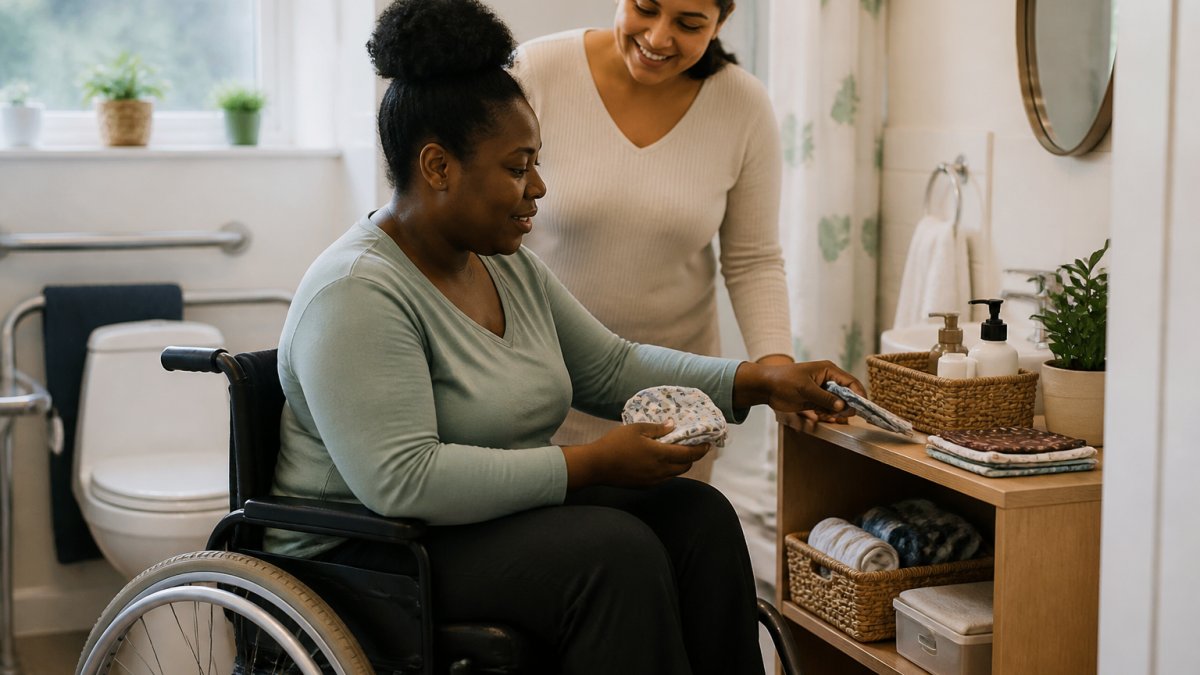
Streamlining these physical tasks often extends to the rest of one’s daily dressing process, where selecting appropriate easy-on footwear options can further minimize the energy required for independent self-care.
Build the routine around these steps:
- Map the bathroom layout and note what is reachable
- Decide who does which task, and write it down
- Set timed reminders for changes
Sensory Needs and Neurodivergence
Sensory needs are a real part of menstrual care, not a side note. Discomfort with wetness, seams, scent, or the sound of wrappers can make an entire cycle unbearable.
What helps in practice:
- Fragrance-free products with soft, smooth backing
- Seamless underwear instead of winged pads
- Quiet wrappers for privacy in shared spaces
Autistic and other neurodivergent people often manage periods better with routine than with choice. Fewer decisions, same sequence, every time.
Menstrual Care for Caregivers: Privacy, Consent, and Autonomy
Menstrual care for caregivers works best when the person receiving support stays in charge of what they can. Support is not the same as taking over.
Start with consent. Ask how the person wants help, who they want helping, and what they want to do themselves.
A workable support agreement covers:
- Which tasks the person handles alone
- Which tasks need hands-on help
- How the person signals that they need assistance
Supported decision-making means offering information and options, not making the call.
Teaching Menstrual Care to Young People With Disabilities
Teaching menstrual care starts before menarche, not after. Anticipatory guidance gives a young person time to learn about bleeding, products, and body changes without fear.
What to cover early:
- What a period is, in plain language
- What products exist and how each one works
- Where supplies live and how to ask for them
Young people with learning and developmental disabilities often learn best through repetition, visuals, and practice outside their period.
The first period is a milestone. Prepare for it the way you would any other new skill: slowly, with practice, and without shame.
Managing Period Pain, Heavy Flow, and When to Seek Clinical Advice
Period pain and heavy flow are common, but severe symptoms deserve a clinician’s attention, not a stronger pad. General education cannot tell you what is causing your symptoms.
Signs worth raising with a healthcare provider:
- Bleeding that soaks through protection in an hour
- Pain that stops daily activity or school
- Cycles that are consistently unpredictable
People with disabilities sometimes have pain dismissed as part of their condition. Our guide to heavy periods, warning signs, and care explains what to track and what to bring to an appointment.
The CDC’s guidance on heavy menstrual bleeding is a reliable starting point for understanding when flow crosses into a concern.
Access, Affordability, and Disposal: Making Period Care Sustainable
Access is part of menstrual care, not a separate issue. Reusable options cost more up front even when they save over time.
Practical ways to keep care sustainable:
- Build a small backup stash for emergencies
- Choose reusable products where laundry is manageable
- Ask schools and support programs about supply access
The World Health Organization’s work on menstrual health treats access to products and facilities as a health issue, not a luxury (the WHO).
What matters most when building a plan
Menstrual care for people with disabilities is not one product or one routine. It is a plan built around a real body, a real bathroom, and real support.
Here is the short version:
| Situation | First move | Why it helps |
|---|---|---|
| Limited dexterity | Switch to pads or period underwear | No insertion required |
| Wheelchair user | Reduce changes, set up a station | Fewer risky transfers |
| Sensory sensitivity | Fragrance-free, seamless products | Less daily discomfort |
| Caregiver support | Write a consent agreement | Protects autonomy |
| Severe pain or heavy flow | Track symptoms, call a clinician | Rules out treatable causes |
Frequently Asked Questions
How can menstrual care be made more accessible for people with disabilities?
Accessible menstrual care starts with products that match a person’s mobility, dexterity, and sensory needs. Reusable cloth pads with wings, period underwear, and larger pads can be easier to manage than tampons or cups for people with limited hand strength. Other key steps include setting up a changing routine with supplies within reach, using transfer belts for safe repositioning, and involving the person in decisions about their own care. Caregivers should prioritize privacy and ask before assisting. Schools, workplaces, and support programs can also stock accessible products and provide clear, step-by-step education.
What period products may be easier to use with limited mobility?
Pads with wings and reusable cloth pads tend to be easier to position for people with limited mobility because they do not require internal insertion. Period underwear is another option that some people find simpler since it works like regular underwear. For heavier flow or postpartum needs, larger reusable pads with waterproof backing offer more coverage. Tampons and menstrual cups can work for some people, but they require more dexterity and may be harder to change during transfers. The best choice depends on individual hand function, sensation, and comfort.
How can caregivers support menstrual care while respecting privacy and autonomy?
Caregivers can support menstrual care by asking what help the person wants before stepping in, explaining each step, and offering choices about products and routines. Knock before entering, close doors, and let the person do as much as they can independently. When hands-on help is needed, narrate what you are doing and check in often. Supported decision-making means the person with the disability leads the conversation about their own body and care. Keep a written care plan that documents preferences, products, and emergency steps so everyone on the care team follows the same approach.
What can help make changing period products easier for wheelchair users?
Changing period products in a wheelchair works best with a consistent routine and the right setup. Keep supplies within arm’s reach in a bathroom caddy or shelf, use a transfer belt with handles if you need help repositioning, and choose pads or period underwear that are easy to pull or adjust. Some people find it helpful to change products before transfers rather than after. A mirror, good lighting, and a private space support dignity. If transfers are part of the routine, plan them around changing times and use safe technique to protect both the person and the caregiver.
Periods should never be a source of shame or a daily struggle, and they do not have to be. At EVE, we build reusable cloth pads, leak-proof period underwear, and comfort-focused supplies for people whose needs rarely make it into mainstream period advice. Our products are designed for sensitive skin, discreet delivery, and the realities of real bodies. Explore EVE and build a period care routine that fits your life, not the other way around.






