
Quick Summary
Period products without chemicals are best judged by their specific claims rather than broad phrases like “chemical-free,” since every material is made of chemicals. Look for fragrance-free and dye-free formulas, clearly labeled materials such as organic cotton or plant-based cores, and third-party certification. Reusable options like cloth pads and menstrual cups can also lower the cost per period over time.
- Chemical-free” is not a literal standard, so check specific claims instead of the front-of-pack phrase.
- Fragrance-free and dye-free are concrete checks, and fragrances and dyes are common causes of irritation.
- Look for the USDA organic or GOTS certification mark, not just the word “organic.
- Compare cost per use over the life of a reusable product against your disposable spending.
- Start with one or two products in a small pack and note how your skin feels after a full cycle.
Table of Contents
- Why People Look for Period Products Without Chemicals
- What Are Sanitary Pads Made Of?
- What “Chemical-Free” and “Non-Toxic” Actually Mean on a Label
- Best Sanitary Pads Without Chemicals: Our Picks from the EVE Range
- Period Products for Sensitive Skin: What to Check First
- Reusable Period Products: Cloth Pads and Cost Over Time
- Choosing Your First Chemical-Free Period Product
- Frequently Asked Questions
Why People Look for Period Products Without Chemicals
Many people want period products made without harsh chemicals, especially when their skin is sensitive or they prefer to limit what touches the body for hours at a time.
The concern usually comes from a few places. Some people notice itching, redness or rashes after using a certain product. Others simply want to choose materials they understand.
Knowing what you are looking for makes shopping much simpler. Start by identifying your skin’s needs, your flow pattern, and the features you care about most, such as breathability, fragrance-free formulas, or organic materials.
What Are Sanitary Pads Made Of?
Most disposable sanitary pads are built from a few main layers: a top sheet that touches the skin, an absorbent core, and a backing layer that keeps fluid from leaking through.
Common top-sheet materials include cotton, bamboo fibers, and synthetic nonwovens. Absorbent cores are often made from wood pulp, but some brands use plant-based fibers such as banana or bamboo.
Organic cotton is grown without synthetic pesticides or fertilizers, and certified products carry third-party verification of that claim.
What “Chemical-Free” and “Non-Toxic” Actually Mean on a Label
Here is the uncomfortable truth that most shopping guides skip: every material is made of chemicals, including water and organic cotton. So “chemical-free” cannot be taken literally.
“Non-toxic” is similar. It is a marketing term, not a single government standard for period products in the United States. That does not make it meaningless, it means you have to look past the phrase to the specifics behind it. A label that says “fragrance-free, dye-free, elemental chlorine-free” tells you something concrete.
What research can and cannot establish
It helps to separate verified facts from alarming claims. What is well established: fragrances and dyes are common causes of contact dermatitis and vulvar irritation, which is why dermatologists often recommend fragrance-free products for sensitive skin.
That distinction matters. It means the reasonable goal is not “zero chemicals”, an impossible standard, but lower-irritant, well-disclosed, third-party-verified products. The same preference for clear disclosure over fear-based claims can guide choosing chemical-free products for bath routines, where ingredient transparency matters more than an absolute promise.
A repeatable label-verification checklist
Use the same five steps every time you compare products, so marketing language cannot do the work for you.
- Read the full ingredient or material list, not the front of the pack. The front panel is advertising; the back panel or product listing is where materials are named. If a brand will not disclose the top sheet, core, and backing materials, treat that as a data point.
- Confirm the specific claims you care about. “Fragrance-free” and “unscented” are not identical, unscented can mean a masking fragrance was added. “Dye-free” should be stated explicitly. “Elemental chlorine-free” (ECF) or “totally chlorine-free” (TCF) refers to the bleaching process.
- Check whether an organic claim is certified. The USDA National Organic Program sets the legal meaning of “organic” for agricultural products in the United States, and the Global Organic Textile Standard (GOTS) verifies organic fiber content and processing for textiles. A cotton field can be organic without the finished pad being certified, so look for the mark, not just the word.
- Look for third-party testing language. Independent lab testing for things like skin irritation or microbial safety is a stronger signal than a brand testing its own product. If a listing mentions testing, check whether the tester is named.
- Compare the disclosure across products. A brand that names every layer and process is easier to trust than one that names none, even if both use similar materials.
USDA National Organic Program standards
Global Organic Textile Standard
None of this requires a chemistry degree. It requires slowing down at the label and asking, “What exactly is being claimed, and who checked it?” That habit will serve you across every product category, not just period care.
The article breaks down the common label claims and what each one concretely means for shoppers.
| Label claim | What it concretely means | What to check |
|---|---|---|
| Chemical-free | Not a literal standard; everything is made of chemicals | Ignore as a standalone phrase |
| Non-toxic | Marketing term, not a single U.S. standard for period products | Look for specifics behind it |
| Fragrance-free | No added fragrance; common cause of irritation | Compare with “unscented” |
| Dye-free | No added dyes | State explicitly on label |
| ECF / TCF | Elemental chlorine-free or totally chlorine-free bleaching | Check the bleaching process |
| Organic | Verified organic fiber, not always certified finished product | Look for certification mark |
Best Sanitary Pads Without Chemicals: Our Picks from the EVE Range
We have built our range around the features shoppers ask about most. Here are several options, each suited to a different need.
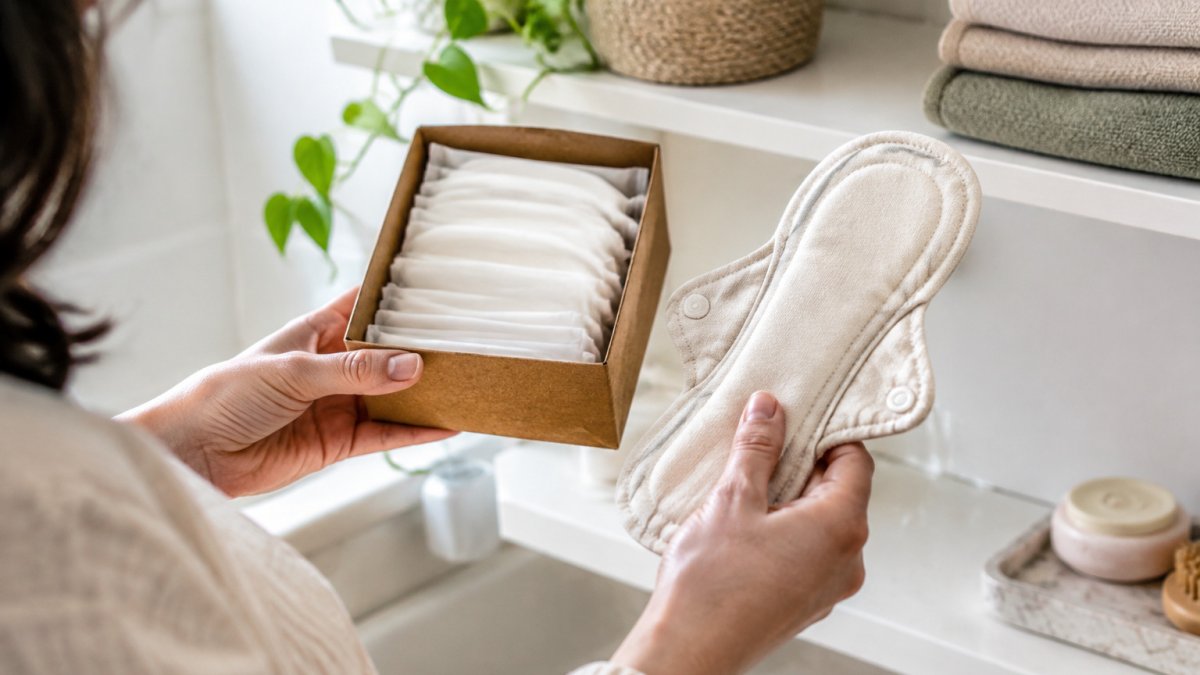
Plush Ultra-Thin Sanitary Napkins, 25 Pcs is listed as a heavy-flow option with extra-long XXL pads and a set of panty liners.
INERTIA The Perfection Green Organic Cotton Pads with Wings (12 Count) is listed at $15.99.
Avni Lush Reusable Cloth Sanitary Pads (2 Pads, XL) is a heavy-flow option made from organic cotton, starting at $5.73. The listing describes it as chemical-free and antimicrobial laboratory tested.
Choose based on your flow, your comfort needs, and whether you prefer disposable or washable products.
Period Products for Sensitive Skin: What to Check First
If your skin reacts easily, start with the simplest ingredient list. Fragrance-free and dye-free products remove two of the most common irritants.
Pay attention to the top sheet, because it is the layer in direct contact with your skin. Thin, soft materials are often more comfortable for sensitive areas. Also consider how the product fits.
A gentle intimate wash can also help.
If irritation, itching or rash lasts more than a few days, stop using the product and speak with a qualified healthcare professional. This guide is general education and does not replace medical advice.
Reusable Period Products: Cloth Pads and Cost Over Time
Reusable products look more expensive at checkout, but the comparison only makes sense when you count uses, not purchases. A single cloth pad or menstrual cup is designed to be washed and reused for many cycles, while a disposable pad is used once. A compact cup with a sterilizer is one option to consider if you want a lower-cost reusable setup. You can compare a reusable menstrual cup option to see how the upfront price stacks up over time.
How to calculate cost per use
You do not need a spreadsheet, just three numbers: the upfront price, the number of uses you realistically expect, and any ongoing care costs.
- Cloth pads: Divide the pack price by the number of pads, then divide again by the number of cycles you expect each pad to last. Most cloth pads are designed to hold up for a year or more of regular washing, though lifespan depends on fabric quality and how you care for them. A pack of six pads used across a typical cycle can replace a meaningful share of disposable pads each month.
- Menstrual cups: A cup is a single purchase used for many cycles. Manufacturers commonly state a replacement window of roughly one to a few years depending on material and care, so divide the price by the number of cycles you expect to use it. Because one cup replaces many disposables per cycle, the per-use figure is usually the lowest of any option, but only if the fit works for you.
- Ongoing care costs: Add a small allowance for water, detergent, and, for cups, sterilizing supplies or a microwaveable sterilizer. These are modest but real, and they belong in the comparison.
A simple way to frame it: compare the upfront price against what you currently spend on disposables over the same number of cycles. If a reusable option costs more than your disposable spending over that window, it has not paid off yet; if it costs less, it has.
What reusables actually require
Cost is only half the story. Reusables ask for care and planning, and that trade-off is where many people either fall in love with them or quietly abandon them.
- Washing cloth pads: Rinse in cold water after use, wash with a mild fragrance-free detergent, and dry fully before storing. Avoid fabric softener, which can coat the absorbent layers and reduce performance.
- Sterilizing cups: Boil or use a microwaveable sterilizer between cycles, and wash with mild soap and water between changes.
- Carrying and changing: Reusables need a wet bag or pouch for used items and a plan for changing when you are away from home. This is the most common practical hurdle.
Watch out: reusables are not a good fit for every situation, if you have limited access to clean water or a washing machine, or if you need a product you can change and discard quickly at work or school, disposables may be the more realistic choice. That is not a failure; it is a fit question.
Matching the product to your needs
Cloth pads suit people who prefer external protection, have sensitive skin, or want to reduce waste. Menstrual cups suit people comfortable with internal products who want long wear between changes. Neither is universally better.
FDA information on menstrual products
Explore the EVE range to compare reusable and disposable options side by side, and start with one product rather than a full set so you can test fit and care before committing.
Choosing Your First Chemical-Free Period Product
Start with one or two products rather than buying a full year’s supply. Try a small pack first, and note how your skin feels after a full cycle. A fragrance-free intimate wash for daily use can pair well with a gentle pad.
Use this quick checklist when comparing options:
- Fragrance-free and dye-free
- Clearly labeled materials, such as organic cotton or plant-based cores
- Certification or third-party verification where available
- A top sheet that feels soft and breathable
- Flow level that matches your needs
- Price per pad or per use, compared with other options
Keep in mind that no product suits everyone. If you have ongoing skin problems, heavy bleeding, or unusual symptoms, a healthcare professional can help you find the cause and the right approach.
Explore the EVE range to compare organic, fragrance-free, and reusable options side by side, and choose the products that fit your body and your routine.
Frequently Asked Questions
What is the most non-toxic period product?
No single product is non-toxic for everyone, but many people choose options made with certified organic cotton, fragrance-free and dye-free materials. Reusable cloth pads, menstrual cups and organic cotton pads are common choices. Check ingredient disclosures and certifications such as GOTS on the packaging, and talk with a healthcare professional if you have ongoing irritation or infection concerns.
What is the healthiest period product to use?
The healthiest product is usually the one that fits your flow, skin and daily routine while keeping you comfortable and protected. Many people with sensitive skin prefer fragrance-free, dye-free cotton products. Changing products regularly and keeping the area clean and dry also matters. If you notice persistent itching, odor or discharge changes, see a qualified healthcare professional.
Which period pads don’t have chemicals?
Look for pads labeled organic cotton, fragrance-free and chlorine-free, and check the ingredient list. The EVE range includes Pee Safe 100% Organic Cotton Biodegradable Sanitary Pads, Plush Ultra-Thin Sanitary Napkins labeled No Fragrance, and Anandi Panty Liners with a certified 100% organic cotton top sheet. Labels describe features but are not independent test results, so read them carefully.
Are fragrance-free period products better for sensitive skin?
Fragrance-free products reduce one common source of irritation for sensitive skin, because added scents are a frequent cause of redness and itching. Fragrance-free does not guarantee that a product will not irritate you, since materials and dyes also matter. Patch testing a new product on a small area of skin before regular use can help you see how your body responds.






