

Last Updated: November 4, 2026
Quick Summary
To choose the right pad size, match the pad’s length and absorbency to your flow and your day, since pad size is the measurement of a sanitary pad’s length and width. Measure your underwear’s crotch area and compare it to the pad length in millimeters, then size up in length first if you leak.
- Most pads fall into four absorbency levels: light, regular, super, and overnight.
- Measure your underwear flat from front to back, then compare it to your pad’s length in millimeters.
- Your pad should cover the full crotch area plus a little extra at the back.
- Front and back leaks mean the pad is too short; side leaks usually mean the wings are wrapped wrong.
- For heavy flow, look for a length of 320mm or more and a wider back.
Table of Contents
- Why Pad Size Matters More Than You Think
- Pad Absorbency Levels Explained
- How to Measure for Pad Size and Length
- Choosing Pad Size Based on Flow and Activity Level
- Signs of a Pad That Is Too Small
- Best Period Products for Heavy Flow
- How to Prevent Period Leaks at Night
- Menstrual Flow Tracking Tips for Better Pad Choices
- Frequently Asked Questions
Why Pad Size Matters More Than You Think
The right pad size is the difference between a comfortable day and a ruined pair of jeans. Many people wear the wrong size for years, and it often comes down to one habit: buying whatever is on sale without checking the length.
Pad size is the measurement of a sanitary pad’s length and width, and it decides how much fluid the pad can hold before it leaks. A pad that is too short will leak at the front or back. A pad that is too long can feel bulky and rub against sensitive skin.
Absorbency and length are two separate things. A pad can be super absorbent and still leak because it is too short for your body. That is why learning how to choose the right pad size for your period matters just as much as picking the right absorbency level. Since a pad’s length affects how well it stays in place and protects against leaks, period underwear for side sleepers can be another option to consider when choosing overnight coverage.
Below, we break down absorbency levels, show you how to measure, and match sizes to your flow and your day.
Pad Absorbency Levels Explained
Most pads sit in one of four absorbency levels. Each level handles a different amount of flow, and each comes in a range of lengths.
Light, Regular, Super, and Overnight: What Each Level Handles
- Light: For the last days of your period or spotting. Short and thin.
- Regular: For light to medium flow. The everyday option for most people.
- Super: For medium to heavy flow. Longer and more absorbent.
- Overnight: For heavy flow and sleep. The longest option, often with a wider back.
The absorbency label tells you how much the pad holds. The length tells you how much coverage you get. You need both to match.
If your flow is light and you want a pad built for those days, shop regular sanitary pads for light flow to see a soft, faster-absorbing option.
Here is how the four main absorbency levels compare, based on what each one is built to handle.
| Absorbency level | Best for | Key difference |
|---|---|---|
| Light | Last days of period or spotting | Short and thin |
| Regular | Light to medium flow | The everyday option for most people |
| Super | Medium to heavy flow | Longer and more absorbent |
| Overnight | Heavy flow and sleep | Longest option, often with a wider back |
How to Measure for Pad Size and Length
Measuring takes about a minute. You need a ruler or measuring tape and one pad you already own.
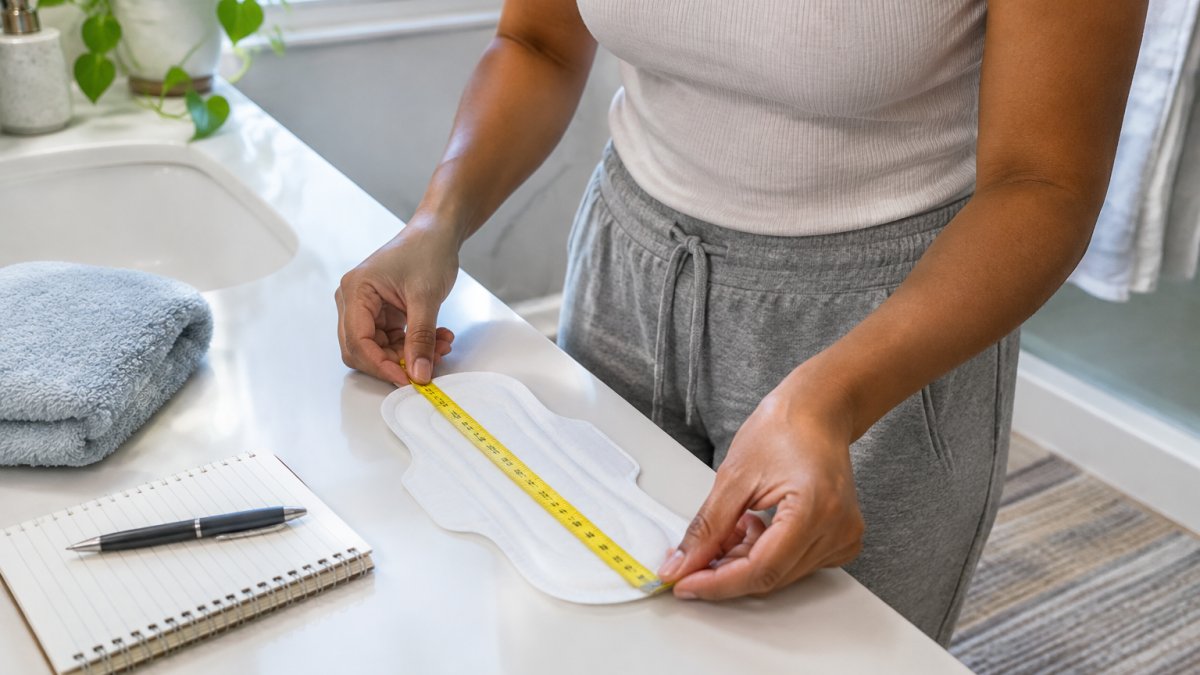
- Measure your underwear. Lay your usual underwear flat and measure the crotch area from front to back.
- Measure your current pad. Note the full length in millimeters.
- Compare the two. Your pad should cover the full crotch area plus a little extra at the back.
- Check the wings. Wings should wrap around the underwear edge, not sit on top of it.
Most pads list length in millimeters on the package. A pad shorter than your crotch measurement will leak at the ends. That is the number to watch.
If you are between sizes, go longer for sleep and shorter for daytime comfort.
Choosing Pad Size Based on Flow and Activity Level
Your flow changes across your period, and your day changes too. The best approach is to match the pad to both.
Ask yourself two questions each morning: how heavy is my flow today, and what am I doing?
Matching Pad Size to Your Day
- Light flow, desk day: Light or regular pad, short length.
- Medium flow, normal day: Regular or super pad.
- Heavy flow, active day: Super or overnight pad with a wider back.
- Heavy flow, overnight: Overnight pad, longest length available.
- Postpartum or very heavy flow: Extra-long overnight pads with a wider back for full coverage.
For active heavy-flow days, a longer pad with a wider back gives you coverage that moves with you. You can browse longer wider-back pads for heavy flow days to find a fit for daytime wear.
A common mistake is wearing one size all day. Change your pad size as your flow changes, just like you change absorbency.
Signs of a Pad That Is Too Small
Your pad is probably too small if you notice any of these:
- Leaks at the front or back edge, not the sides
- Stains on underwear near the waistband or the back
- The pad shifts forward or back when you move
- You need to change every hour or two on a medium day
- The pad feels bunched or narrow in the center
Front and back leaks are the clearest sign. Side leaks usually mean the wings are not wrapped correctly. End leaks mean the pad is too short.
If your pad is too small, size up in length first, then absorbency. You can find extra-large overnight pads if this sounds familiar.
Best Period Products for Heavy Flow
Heavy flow needs two things: high absorbency and long coverage. Look for pads labeled super, overnight, or extra-long, and check the millimeter length on the pack.
For heavy flow days and nights, look for a longer, highly absorbent pad. You can browse heavy flow sanitary pads to see options built for heavier days.
What to look for:
- Length of 320mm or more
- A wider back for sleep
- Wings that stay put
- A dry-feel top sheet for comfort
Watch out: a pad labeled “super” can still be short. Always check the length in millimeters, not just the absorbency word.
How to Prevent Period Leaks at Night
Night leaks usually come down to three things: pad length, pad position, and how you sleep.
- Choose the longest pad you can find. Overnight pads are made longer for a reason.
- Place the pad further back. Shift it toward the back of your underwear to cover where you lie.
- Wear fitted underwear. Loose underwear lets the pad move.
- Change right before bed. A fresh pad holds more.
- Try sleeping on your side with a pad that has a wider back.
For overnight use, you can shop overnight sanitary pads with wings.
If you leak most nights even with an overnight pad, talk to a healthcare professional. Very heavy bleeding is worth checking (the CDC).
Menstrual Flow Tracking Tips for Better Pad Choices
Tracking your flow turns pad buying from guesswork into a plan. Note your flow level each day, the pad size you used, and whether it leaked.
After one or two cycles, patterns appear. You will see which days need overnight pads and which days a regular pad is enough. You will also spot leaks before they become routine.
A period tracking app can make this easier by helping you log your flow and review patterns before your next cycle.
Bring your notes to a healthcare provider if your flow changes suddenly or feels unusually heavy.
Frequently Asked Questions
How do I know which pad size I need?
Start by matching absorbency to your heaviest flow days and length to your body and activity. Light and regular pads suit lighter days, while super and overnight pads handle heavier flow. Measure the length of your underwear’s gusset and choose a pad that covers it fully. If you leak through within two hours, move up a size. Tracking your flow for a cycle or two can make the pattern clearer.
Does pad size correspond to flow intensity?
Yes. Absorbency levels are designed around how much fluid a pad can hold. Light pads suit spotting or the last days of your period, regular pads fit moderate flow, and super or overnight pads are built for heavy flow. Length also matters: longer pads cover more of your underwear and reduce leaks, especially when you lie down. If your flow changes mid-cycle, keep two sizes on hand rather than relying on one.
What is the difference between regular, super, and overnight pads?
Regular pads are shorter and thinner, suited to moderate daytime flow. Super pads are longer and more absorbent for heavier days or longer stretches without a change. Overnight pads are the longest, often 300 millimeters or more, with extra coverage at the back to protect against leaks while you sleep. EVE’s overnight sanitary pads with wings are one option for heavy menstrual periods.
How often should I change my pad to prevent leaks?
Change your pad every three to four hours during the day, or sooner if it feels damp or full. On heavy flow days, you may need to change every two hours. At night, choose a longer overnight pad and change it when you wake. Wearing a pad too long can cause irritation and odor, so keeping a spare in your bag makes changes easier.
Figuring out your pad size should not take years of trial and error. Start by measuring your underwear and your current pad, then match length to your flow and your day. At EVE, we make menstrual care products in a range of lengths and absorbencies, plus a tracking app that helps you learn your own pattern cycle after cycle. Explore EVE today and build a period routine that actually fits your body.






