
Table of Contents
- Home Tests vs. Lab Tests: What’s the Real Difference
- Rapid Test Accuracy: What the Science Shows
- How to Use an At-Home Test Correctly
- Understanding False Negatives and False Positives
- Convenience, Privacy, and Accessibility
- What to Do After You Get Your Test Result
- Choosing a Reliable Home Test
- Frequently Asked Questions
Last Updated: October 20, 2026
Home Tests vs. Lab Tests: What’s the Real Difference
At Eve, we understand why home tests appeal: they’re convenient, private, and often faster than a clinic visit. But does that convenience come at the cost of accuracy? Understanding home tests accuracy helps you make informed choices about your health.
Home tests and lab tests operate under different conditions and serve different purposes. Knowing those differences helps you choose what fits your situation.
How Self-Testing Works
Self-tests are designed to be performed at home without professional help. You follow the kit instructions, collect your own sample (usually blood, urine, or a swab), and either read the result yourself or mail it to a lab.
Rapid tests, like pregnancy or antigen tests, give results in minutes via a chemical reaction on a strip. Other self-tests require mailing a sample to a lab, where technicians process it under controlled conditions.
The challenge with self-testing is sample collection. With a blood sample, depth and angle matter: too shallow and you won’t have enough blood for an accurate result.
Professional Sample Collection at Home
This is the middle ground. Some testing services send a trained professional to your home to collect the sample. You get the convenience of staying home without the risk of improper technique.
For people with mobility challenges, anxiety about clinical settings, or a preference for home-based care, professional home collection removes the biggest accuracy risk of self-testing. The sample then goes to a lab for analysis under the same controlled conditions as any clinic-collected specimen.
Eve offers at-home sample collection kits like the Feelgood HolistiCheck Men’s Wellness Test ($189.00), which arrives at your door and can be completed in your own space.
Laboratory Testing in a Clinical Setting
When you visit a clinic or laboratory, trained phlebotomists collect your sample using standardized procedures, and it’s immediately processed or stored under conditions designed to preserve its integrity.
Lab-based testing is the gold standard for accuracy because variables are minimized. The collector has done it thousands of times, equipment is calibrated regularly, and the chain of custody is documented.
The tradeoff is convenience: you need an appointment, may need to travel, and might wait in a clinic. For routine screening or when precision is critical, many people find it worthwhile.
Rapid Test Accuracy: What the Science Shows
Rapid tests are part of everyday life, but accuracy varies significantly by test type, how well you follow instructions, and what you’re testing for.
Sensitivity and Specificity Explained
When medical professionals talk about test accuracy, they use two terms: sensitivity and specificity. Understanding the difference changes how you interpret results.
Sensitivity measures how often a test correctly identifies people who have the condition; a highly sensitive test rarely misses cases but may flag people who don’t have it.
A highly sensitive pregnancy test can detect hormones very early, sometimes before a missed period. A highly specific test is more likely to be accurate when positive but might miss early pregnancies.
For home tests, sensitivity and specificity vary by manufacturer and test type. Your instructions should include this information; if they don’t, that’s a red flag about reliability.
Accuracy Varies by Test Type
Not all home tests are created equal. A home pregnancy test using First Response Gold Digital technology ($15.99 for a 2-pack) has different accuracy characteristics than a vaginal pH test or a colon screening test.
Pregnancy tests, used correctly after a missed period, typically detect a hormone that’s either present or not.
Colon screening tests that detect hidden blood in stool, like the COLONOX At-Home Colon Screening Test Kit ($24.97 for 3 tests), depend heavily on proper collection and precise instruction-following.
The key distinction: screening tests identify people who might have a condition and need further testing. Diagnostic tests confirm whether you actually have it. Home tests are often screening tools.
How to Use an At-Home Test Correctly
A well-designed home test can be highly accurate when used properly. Used incorrectly, even the best test becomes unreliable.
Sample Collection Matters
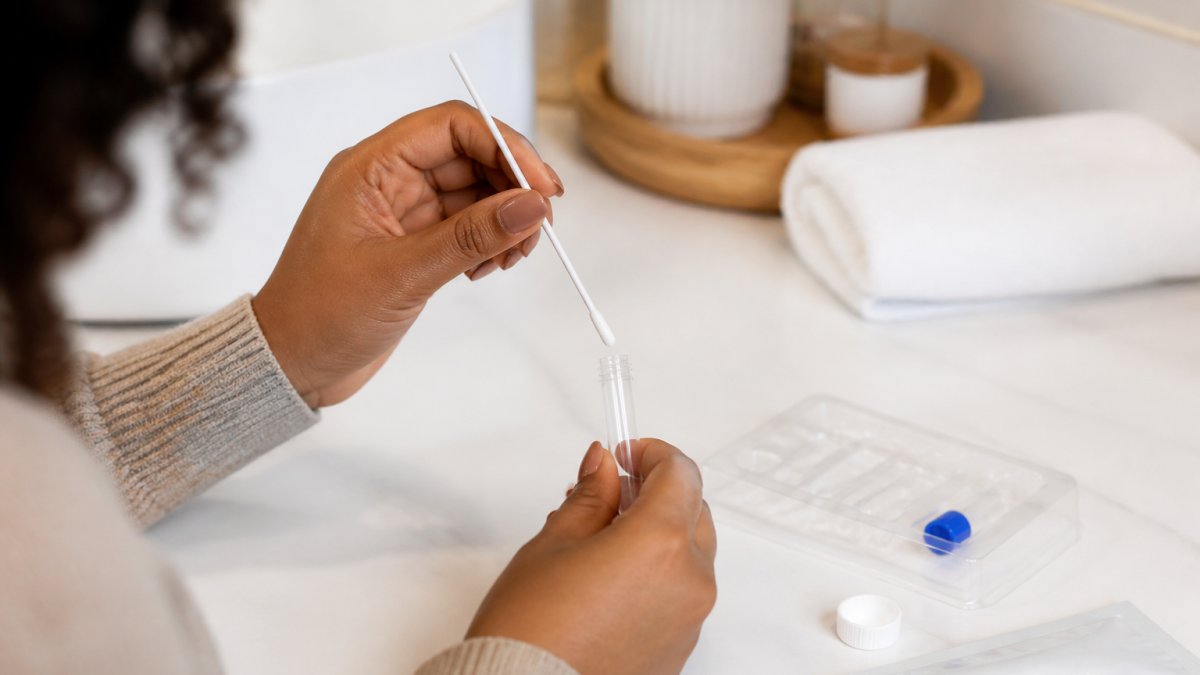
Before you open the kit, read the entire instruction sheet. Note any special requirements like fasting, timing, or temperature.
When you’re ready to collect your sample, make sure your hands are clean and dry; contamination is one of the most common reasons home tests fail.
For urine tests, use first morning urine if the instructions specify it; it’s more concentrated and more likely to contain detectable levels. For swab tests, swab the correct location for the correct duration. Don’t rush.
Temperature and timing matter too. Some tests must be read within a specific window, usually 3-5 minutes; reading too early or too late can change the result.
Common Mistakes That Affect Results
The most common mistake is not following instructions carefully. People skim the directions, assume they know how to use a test, and then wonder why results seem off.
Contamination is another major issue. Touching the strip with unwashed hands, letting the sample touch non-sterile surfaces, or mixing it with other substances all compromise accuracy.
Timing errors happen frequently. Using an expired test, testing too early or too late in your cycle, or not waiting the full development time can all produce inaccurate results.
Extreme temperatures, high humidity, or direct sunlight can damage reagents. Store tests in a cool, dry place and use them before the expiration date.
Understanding False Negatives and False Positives
Even when you follow instructions perfectly, home tests can produce misleading results. A false negative says you don’t have something when you do; a false positive says you have something when you don’t.
What Causes a False Negative
False negatives happen when a test fails to detect a condition that’s present.
Sample quality matters too. Too little sample, or a sample that degraded before testing, may not show what’s there. For mailed samples, extreme heat or cold for days can degrade a sample and produce false negatives.
Improper storage of the kit itself can cause false negatives. Reagents are delicate; moisture, heat, or direct sunlight can damage them and make them less sensitive.
Some people naturally have lower levels of the marker being tested. Individual variation is one reason a negative result sometimes needs follow-up testing.
What Causes a False Positive
False positives are less common with most home tests, but they happen. They usually result from contamination, cross-reactivity, or user error rather than a problem with the test itself.
Contaminating the test with another substance, food, medication, or even residue on your hands can trigger a false positive.
Certain medications or health conditions can cause false positives on specific tests. Check whether your supplements or medications could interfere.
Timing can also cause false positives. Read the test too late, after the development window, and evaporation lines can appear and look like positive results. Read at the specified time.
Convenience, Privacy, and Accessibility
Beyond accuracy, there are legitimate reasons people choose home testing. Privacy matters. Some people feel uncomfortable discussing certain health concerns in a clinical setting. Home testing removes that barrier.
Convenience is real too. You don’t need time off work, transportation, or a clinic wait; you test when you’re ready.
Cost can be a factor. Some home tests are less expensive than a clinic visit, especially without insurance or with a copay. Eve’s vaginal pH test strips at $6.99 are significantly cheaper than a clinic visit for the same screening.
Accessibility matters too. Not everyone lives near a clinic or laboratory; rural areas, underserved communities, and people with limited transportation often benefit from home testing.
What to Do After You Get Your Test Result
The result is just the beginning. What you do next depends on what the test shows.
Positive or Concerning Results
If your home test shows a positive result or something concerning, don’t panic, but do follow up. Home tests are screening tools in most cases. A positive result means you should see a healthcare professional for confirmation and guidance.
Schedule an appointment with your doctor or a clinic. Bring your test if possible, and tell your provider when you took it, how you collected the sample, and any symptoms. They can perform a confirmatory test and discuss next steps.
Don’t start treatment based solely on a home test result. Even if you’re fairly sure what’s going on, a healthcare professional needs to evaluate your situation; a screening tool isn’t always sufficient for diagnosis.
Negative Results and Peace of Mind
A negative result doesn’t always mean you’re in the clear, especially if you tested too early or have symptoms. If you tested negative but still have symptoms, follow up with a healthcare provider; they might recommend retesting at a different time or with a different method.
If you tested negative and have no symptoms, you can usually feel reassured, though reliability depends on the test type, timing, and how carefully you followed instructions.
Keep records of your home test results. If you’re tracking patterns over time, like vaginal pH or temperature changes, written records help you and your healthcare provider see trends.
Inconclusive Results
Sometimes a home test produces an unclear result. The line is faint. The result is ambiguous. The test might not have worked properly.
If you get an inconclusive result, repeat the test with a new kit and follow instructions exactly. If inconclusive results happen repeatedly, see a healthcare professional for a clinic-based test instead.
Inconclusive results are frustrating but useful: they tell you this test isn’t working reliably for you, whether because of technique, timing, or individual factors.
Choosing a Reliable Home Test
Not all home tests are equally reliable. When selecting one, look for a few key quality indicators.
Check whether the manufacturer provides sensitivity and specificity data.
Look for tests evaluated by independent laboratories or that meet relevant regulatory standards.
Read user reviews, but take them with a grain of salt. One person’s experience doesn’t tell you overall reliability.
Consider the manufacturer’s reputation.
Pay attention to storage and handling requirements.
Check the expiration date before you buy. A test that expired six months ago won’t work reliably, even if it looks fine.
Getting answers about your health matters.
At Eve, we believe you deserve access to reliable health information and testing options that fit your life.
Frequently Asked Questions
Are at-home health tests as accurate as tests done at a clinic?
Home tests and clinic tests can be equally accurate when used correctly, but they measure different things. Self-administered home tests depend on proper sample collection and technique, while professionally supervised tests in a clinic or lab have controlled conditions. Many home tests show high accuracy rates for screening, but confirmatory testing by a healthcare professional is often recommended for positive or unclear results. Accuracy varies by test type and what you’re testing for.
What factors affect the accuracy of an at-home test?
Several factors influence home test accuracy: sample collection technique, timing of the test, storage and handling of the sample, and following instructions precisely. Environmental conditions like temperature and humidity can affect some tests. The quality of the test kit itself matters too. For vaginal pH tests like our 75-Count Vaginal pH Test Strips, proper application and timing are critical. Using expired tests or contaminating samples also reduces accuracy. Always read and follow all instructions carefully.
Can an at-home test give a false negative or false positive?
Yes, both are possible. A false negative occurs when a test shows negative but the condition is actually present, often due to improper sample collection, testing too early, or a test’s inherent sensitivity limits. A false positive shows positive when the condition isn’t actually present, which can happen with contaminated samples or test errors. This is why confirmatory testing by a healthcare professional is important for any result that affects your health decisions or treatment plan.
How do I choose a reliable at-home health test?
Look for tests from reputable manufacturers with clear labeling of sensitivity and specificity rates. Check if the test is appropriate for your specific health concern. Read customer reviews and verify that instructions are clear and easy to follow. At Eve, we offer several trusted options like our COLONOX At-Home Colon Screening Test Kit for $24.97 and our Feelgood HolistiCheck Men’s Wellness Test at $189.00, both designed with accuracy and ease of use in mind. Always verify that any test you choose has quality assurance backing.





