

Last Updated: November 11, 2026
Quick Summary
Non-toxic feminine care means products made without ingredients or processes many people want to avoid, such as synthetic fragrances, chlorine bleaching, and certain dyes. Because the term is not a regulated label, the best approach is to read ingredient lists, choose fragrance-free products, and look for specific material disclosures.
- Choose fragrance-free formulas, since added scents are a common irritant for sensitive skin.
- Check the topsheet material by name, such as 100% organic cotton, rather than trusting words like natural or clean.
- Check each layer of a pad, because an organic topsheet can still sit on a conventional backsheet and adhesive.
- Estimate cost per cycle by comparing a month of disposables with a reusable cup’s price over its expected lifespan.
- Choose sizing and fit for reusables over price, since cup and disc sizes vary by brand.
Table of Contents
- What Makes Feminine Care Non-Toxic?
- What Are Sanitary Pads Made Of?
- Organic Cotton vs. Conventional Materials
- Quick Comparison: Our Non-Toxic Picks at a Glance
- Non-Toxic Pads for Heavy Periods
- Panty Liners and Everyday Options for Sensitive Skin
- Reusable Cups and Discs: Cost per Cycle and Care
- Choosing Your Next Non-Toxic Product
- Frequently Asked Questions
What Makes Feminine Care Non-Toxic?
Non-toxic feminine care means products made without ingredients or processing methods that many people want to avoid, such as synthetic fragrances, chlorine bleaching, and certain dyes. The term is informal rather than a regulated label, so the most useful approach is to read ingredient lists and look for clear, specific claims. Choosing products that disclose their materials plainly and are fragrance-free is a practical starting point.
Look for these signals when you shop:
- Fragrance-free formulas, since added scents are a common irritant for sensitive skin
- Clear material lists rather than vague wording like “natural” or “clean” without detail
- Organic cotton or other specified plant-based topsheets
- Compostable or biodegradable wrappers for lower-waste disposal
What Are Sanitary Pads Made Of?
Most disposable pads share the same basic architecture, even when the marketing around them looks very different. Understanding each layer makes it easier to read a label and decide which materials matter for your skin and your priorities.
The topsheet is the layer that touches your body. It is usually made from one of three things: conventional cotton, organic cotton, or a nonwoven polymer such as polypropylene or polyester. Nonwoven fabrics are cheaper to produce and feel smooth and dry, which is why they are common in mass-market products. Organic cotton topsheets are grown without synthetic pesticides, though they may still be bleached or whitened to some degree. Neither option is automatically better for everyone; some people with sensitive skin prefer natural fibers, while others find nonwoven surfaces less irritating because they stay drier.
The absorbent core does most of the work. In many pads it is fluffed wood pulp, which is a cellulose material, combined with superabsorbent polymer (SAP), a granular material that swells when it contacts fluid. SAP is what allows a thin pad to hold a meaningful volume. Some brands market pads as “plant-based” or “biodegradable” because the pulp is renewable, but a core that contains SAP is not fully biodegradable under typical home conditions.
The backsheet is the outer layer that sits against your underwear. It is most often polyethylene, a thin plastic film that keeps fluid from leaking through. Some newer products use a plant-based film made from corn or other starches, which can break down more readily in industrial composting facilities, though these facilities are not available everywhere.
The adhesive and release strips that hold the pad in place are usually a small amount of hot-melt glue on the underside of the backsheet, covered by a paper or plastic release liner. These are not always listed on packaging, which is one reason shoppers who are very sensitive to adhesives sometimes find that a product works fine for one brand and not another.
How to check a specific product: Start with the manufacturer’s own material disclosure rather than the front-of-package claims. A useful product page will name the topsheet material (for example, “100% organic cotton topsheet”), describe the core, and state whether the product is fragrance-free. If a brand says “natural” or “clean” but cannot tell you what the topsheet is made of, that is a sign to look elsewhere. Third-party certifications such as GOTS (Global Organic Textile Standard) for organic cotton can add verification, but read what each certification actually covers before assuming it addresses every ingredient.
Watch out: a product labeled “organic” may contain organic cotton in the topsheet while the backsheet and adhesive are conventional materials, so check each layer rather than assuming the whole product matches the front label.
Organic Cotton vs. Conventional Materials
Organic cotton is grown without synthetic pesticides and is often chosen by people with sensitive skin who want fewer added chemicals against the body. Conventional cotton may be processed with more bleaching or finishing agents, which is one reason many shoppers look for organic certification. Organic does not automatically mean hypoallergenic, so check the product’s own description and your own skin’s response. Our guide on hypoallergenic feminine care products walks through materials in more detail.
Quick Comparison: Our Non-Toxic Picks at a Glance
| Product | Type | Starting Price | Best For |
|---|---|---|---|
| August Regular & Super Organic Pads, 36 ct | Heavy flow pads | $18.99 | Heavier days with organic cotton topsheet |
| August Regular & Super Cotton Pads, 72 ct | Overnight pads | $30.99 | Longer wear and bulk supply |
| 100% Organic Cotton Panty Liners | Panty liners | $10.02 | Light flow and daily use |
| Anandi Organic Cotton Panty Liners, 40 ct | Panty liners | $2.29 | Budget-friendly daily protection |
| Dr. Care Reusable Menstrual Cup | Menstrual cup | $2.08 | Reusable, lower cost per cycle |
| Ecoblossom Menstrual Cups, 2 pack | Menstrual cups | $15.95 | Small-size reusable option |
| SHORDY Menstrual Disc Set | Menstrual discs | $22.95 | Reusable, medical-grade silicone |
| WaterWipes Sensitive Feminine Wipes | Cleansing wipes | $37.16 | Gentle daily and postpartum care |
| The Honey Pot Company Heavy Flow Pads, 56 ct | Heavy flow pads | $31.88 | Heavy days with organic cotton cover |
Starting Price
Non-Toxic Pads for Heavy Periods
Heavy flow calls for higher absorbency, and the August Regular & Super Organic Pads, 36 (18+18) are designed with an organic cotton topsheet for heavier days. If your bleeding is consistently very heavy, or you notice fatigue, our page on heavy periods signs and care explains when to check in with a clinician. You can also read about how heavy bleeding can affect iron levels and fatigue.
Panty Liners and Everyday Options for Sensitive Skin
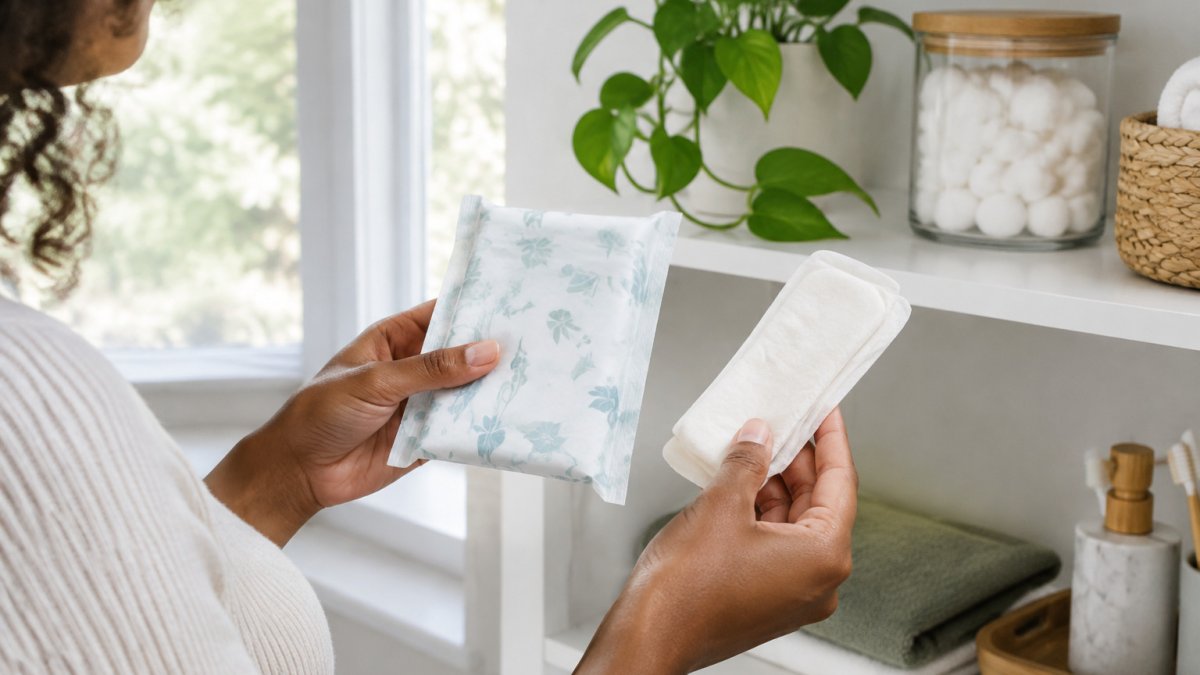
For light flow or the days around your period, panty liners are a gentle option. The 100% Organic Cotton Panty Liners are fragrance-free, breathable, and made in Europe. The Anandi liners carry a certified organic cotton top sheet and are biodegradable. Plush Ultra Thin Panty Liners list no toxins or parabens and a soft cotton surface. Patch-test any new product, and stop using it if irritation develops.
Reusable Cups and Discs: Cost per Cycle and Care
Reusable menstrual cups and discs are often described as cheaper over time, but the savings depend on how long a product lasts, how often you cycle, and how much disposable product you would otherwise buy. Working through a simple cost-per-cycle estimate makes the trade-off concrete.
A simple way to estimate your own numbers: Take the price you pay for a month of disposable products, divide it by your typical number of cycles per year, and compare that to the one-time cost of a reusable product spread across its expected lifespan. For example, if you use one pack of disposable pads or tampons per cycle and your pack costs a set amount, multiply by the number of cycles you expect the reusable to last. Replacement intervals vary by brand, so check the product’s own guidance and your own wear.
Using this method, you can estimate when a reusable would pay for itself. The longer you keep a product, the lower its cost per cycle, but only if you keep it clean and in good condition. Silicone cups and discs can develop small tears, stiffness, or residue over time, and replacement may be worth considering at that point.
Fit and sizing matter more than price. Cup sizes are generally based on age, whether you have given birth vaginally, and cervix position or flow, and each brand measures differently. Discs sit in the vaginal fornix rather than the canal, which some people find more comfortable and which can allow for intercourse while in place, though this varies. If a product does not seat or seal comfortably, trying a different size or brand is more useful than forcing it.
Care between cycles. Rinse the cup or disc with cool water when you empty it, then wash it with unscented, fragrance-free soap or a mild cleanser recommended by the manufacturer. Between cycles, most manufacturers recommend boiling the product in water for a set number of minutes or using a sterilizer, following the instructions in the packaging. Store it dry in a breathable pouch rather than a sealed plastic bag, which can trap moisture.
Disposal and sustainability. Reusables do not generate the packaging and disposable waste that pads and tampons do, but they are still made of medical-grade silicone, a durable plastic. When a cup or disc reaches the end of its life, check your local waste guidance, since many recycling programs do not accept silicone. Some manufacturers run take-back or recycling programs, so check the brand’s site before discarding.
If you notice persistent irritation, unusual odor, or discomfort that does not resolve after changing products, check in with a qualified healthcare professional rather than trying to manage it on your own.
Choosing Your Next Non-Toxic Product
Start with your flow level, skin sensitivity, and how often you change products. If you notice unusual blood color, such as pink, red, or brown spotting outside your normal pattern, our guide on period blood colors and when to get care can help you decide whether to see a clinician. For a wider view of how cycles work, read about the menstrual cycle beyond the period. Our range of organic and non-toxic feminine care products is a practical place to compare options as your needs change.
Frequently Asked Questions
What are the best non-toxic feminine care products?
The best non-toxic options usually share three traits: an organic cotton or plant-based top layer, no added fragrance, and a clear ingredient list. EVE’s catalog includes August organic cotton pads, the 100% organic cotton panty liners, and the Dr. Care and Ecoblossom medical-grade silicone menstrual cups. Choose by flow level and how sensitive your skin is, and start with a single pack to see how your body responds before buying in bulk.
What are sanitary pads made of when they are labeled non-toxic?
Most non-toxic pads use an organic cotton topsheet, which is the layer that touches your skin, and a core made of absorbent material beneath it. The labeling should tell you what the topsheet is made of, whether fragrance is added, and whether the wrapper is compostable. If a brand does not say what its materials are, that is a signal to look elsewhere. Check the product listing before you buy.
Are organic cotton tampons safer than conventional options?
Organic cotton removes pesticide residue from the raw fiber, but the other materials in a product still matter, including bleaching method and any added fragrance. Many people with sensitive skin find fragrance-free, organic cotton products more comfortable. If you have concerns about symptoms such as persistent irritation or unusual discharge, talk with a qualified healthcare professional.
What should I look for in non-toxic feminine care for sensitive skin?
Look for fragrance-free products, a breathable organic cotton topsheet, and a clear list of materials. Products labeled gynecologist approved or pH friendly can be a helpful starting point for daily care. Test a new product for a full cycle before deciding whether it works for you, and stop using anything that causes burning or redness.






