
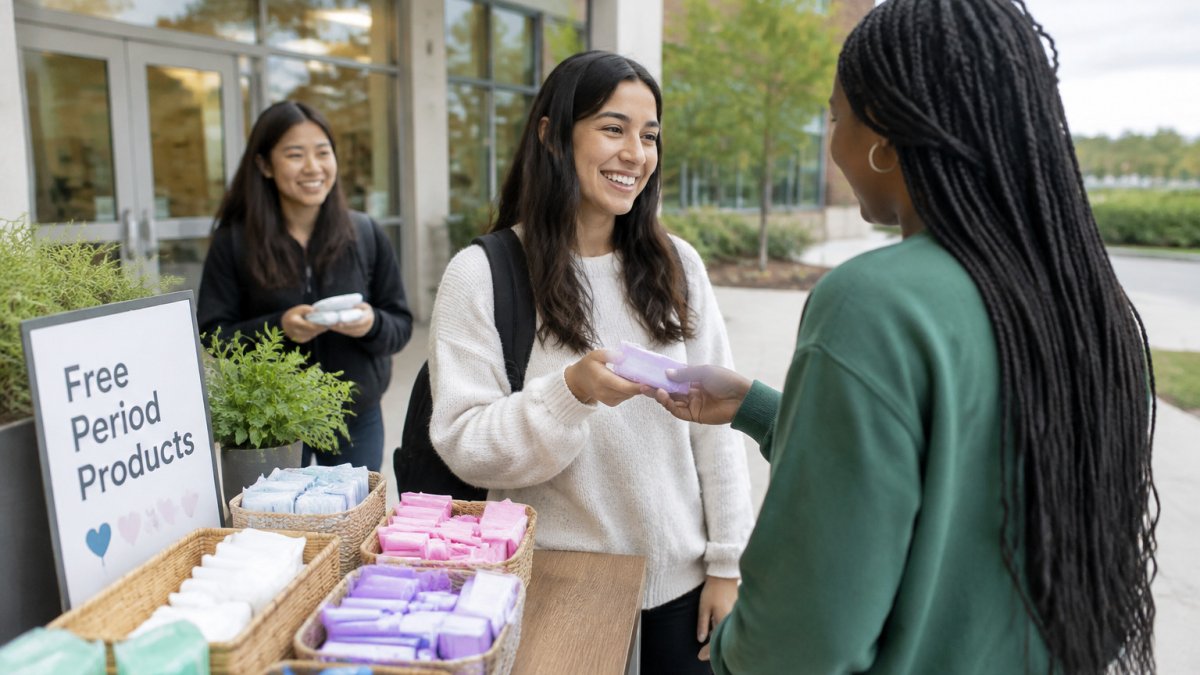
Quick Summary
Period products free of charge are often available through schools, colleges, campus health centers, libraries, community centers, shelters, and local nonprofits, and each source sets its own rules. Many organizations also run online request forms or mail programs. Call ahead to confirm current stock, hours, and what documents you need before you visit.
- Ask the school nurse, counselor, or student services which period products are available and how to request them.
- Call ahead to shelters, food pantries, or nonprofits to confirm stock, hours, and whether you need proof of residency.
- Check online request forms for eligibility rules, and only share the personal information the program actually requires.
- Watch for programs that ask you to pay for free products, request sensitive financial details, or pressure you to act fast.
- Keep a backup source ready, since supplies can run out between restocks or mail shipments.
Table of Contents
- Why Free Period Products Matter and Who Can Get Them
- Free Period Products Near Me: Local Sources to Check First
- Period Products Free Online: How Requests and Sign-Ups Work
- Free Feminine Hygiene Products by Mail: What to Expect
- Free Period Kit Samples by Mail and Trial-Size Options
- Reusable Options Worth Considering If Supplies Are Limited
- Booking Your Next Step: Request Supplies and Plan Ahead
- Frequently Asked Questions
Last Updated: November 8, 2026
Finding period products free of charge is easier than many people expect, but the options depend on where you live, your age, and your situation.
Period poverty is the difficulty of affording menstrual products, and it affects students, people experiencing homelessness, and households on tight budgets (Period Policy is Poppin). Many people also face the pink tax, the extra cost often charged for women’s versions of everyday products.
Why Free Period Products Matter and Who Can Get Them
Free period products matter because a missing product can mean missed school, missed work, or a choice between supplies and other necessities. Access programs exist to remove that barrier. Recent public discussion of menstrual equity and public policy resources has focused on making products available in schools, shelters, and public facilities.
Eligibility differs widely. Some programs serve students of a certain age, others serve anyone who asks, and some require proof of need or residency. Read each program’s listing for its specific rules.
Free Period Products Near Me: Local Sources to Check First
Start with the places you already visit. Local sources are often the fastest way to get supplies, and many stock both disposable and reusable options. The trick is knowing which door to knock on and what to ask, because each location sets its own rules.
Schools, Colleges, and Campus Health Centers
Many K-12 schools and colleges now keep period products in restrooms, at the nurse’s office, or at the student health center. Ask the front office, the counselor, or student services which products are available and how to request them.
A common pattern is that dispensers are restocked on a set schedule, so if a machine is empty, ask when the next restock is due rather than assuming the program has ended.
Public Libraries and Community Centers
Libraries and community centers increasingly serve as informal access points. Ask a librarian or front-desk staff member whether the branch keeps period products on hand or can point you to a nearby program. Some locations keep supplies behind the desk rather than on open shelves, so it helps to ask directly. Community centers may also run hygiene-kit distributions alongside food or family programs.
Shelters, Food Pantries, and Local Nonprofits
Shelters, food pantries, and local nonprofits often distribute hygiene kits that include pads, tampons, or menstrual cups. Call ahead to confirm current stock, hours, and whether you need an appointment or proof of residency. Supplies can run out, so asking about restocking days is useful. If a pantry does not stock period products, ask whether they can refer you to a partner organization that does.
Public Restrooms and Workplace Dispensers
Some public facilities, including certain libraries, recreation centers, and transit hubs, have installed free dispensers in restrooms. Availability is inconsistent, so treat these as a bonus rather than a plan. At work, check whether your employer stocks supplies in restrooms or offers them through an employee assistance program; policies vary by employer and location.
How to Verify Before You Go
Programs and hours change, so a quick call or website check saves a wasted trip. Ask three questions: Do you currently have period products available? What types and sizes do you stock? What do I need to bring, if anything? If you cannot call, check the organization’s website or social media for the most recent update. If a listing you found is out of date, let the organization know so they can correct it.

Access Barriers to Plan Around
Not everyone can walk into a building during business hours. If transportation is limited, ask whether a program offers delivery, curbside pickup, or distribution at a location closer to you. If you need language support, ask whether staff can provide information in your preferred language or connect you with someone who can. For people with disabilities, ask about accessible entrances, seating, and whether staff can bring supplies to a lobby or entrance. These questions are reasonable, and most organizations would rather answer them than have you go without.
Period Products Free Online: How Requests and Sign-Ups Work
Some organizations offer free period products through online request forms or sign-ups. This is one of the least documented paths to free supplies, so here is a practical walkthrough of how these programs usually work and how to tell a legitimate offer from a risky one.
What These Programs Usually Ask For
Most online request programs ask for basic contact information, a mailing address for delivery, and a short statement of need. Some ask about household size or age range so they can send appropriate products. A few may ask for proof of enrollment, such as a student ID number, or a referral from a school or community organization. Read the form carefully before submitting, and only share information the program actually requires.
Eligibility and Age Requirements
Eligibility varies by program. Some serve students only, others serve anyone who asks, and some focus on specific groups such as people experiencing homelessness or households with limited income. Age requirements also differ: a program may serve minors with guardian consent or set a minimum age for direct requests. If a form does not state eligibility clearly, contact the organization before submitting personal details.
How to Verify a Program Is Legitimate
Before you share your address or other personal information, confirm that the organization is a known nonprofit, school, or government program. Check for a physical address, a working phone number, and a clear description of who runs the program. Be cautious about any site that asks for payment to receive a free product, requests sensitive financial information, or pressures you to act immediately. A legitimate program will not ask you to pay to receive free supplies.
How to Submit a Request and Follow Up
When you submit a request, save a copy of the confirmation and note the expected delivery window. If nothing arrives within that window, follow up by email or phone. Keep a record of the date you contacted the organization and the name of anyone you spoke with. If the program cannot help, ask whether they can refer you to another resource.
What to Expect After You Request
Mail programs typically send a small box or envelope containing a set quantity of products. Delivery can take several weeks, and quantities may be limited to one shipment per period of time. Packaging is usually plain to protect privacy. Check the shipment when it arrives and confirm the sizes and types match what you requested. If the quantity does not last until the next shipment, look for complementary sources such as school dispensers or local pantries.
Sample and Trial Programs
Some brands send free samples or trial-size kits so people can test products before buying full sizes. Sample programs are often limited and may run for a short time, so check whether a sample is still offered before expecting one. Trial sizes are useful when you are trying a new type, such as switching to a cup or disc. If you are considering a reusable product, a sample can help you judge fit and comfort.
menstrual equity and public policy resources
Free Feminine Hygiene Products by Mail: What to Expect
Mail programs typically send a small box or envelope containing a set quantity of products. Delivery can take several weeks, and quantities may be limited to one shipment per period of time. Packaging is usually plain to protect privacy.
Check the shipment when it arrives and confirm the sizes and types match what you requested. If the quantity does not last until the next shipment, look for complementary sources such as school dispensers or local pantries.
Free Period Kit Samples by Mail and Trial-Size Options
Some brands send free samples or trial-size kits so people can test products before buying full sizes. Sample programs are often limited and may run for a short time, so check whether a sample is still offered before expecting one.
If you are considering a reusable product, a sample can help you judge fit and comfort. Sizing guidance matters, so follow the product’s instructions and speak with a healthcare professional if you have questions about your body.
Reusable Options Worth Considering If Supplies Are Limited
Reusable products can reduce how often you need to restock. Some menstrual cups and discs in our range are made from medical-grade silicone and are listed for up to 8-12 hours of protection, depending on the product.
Reusable products have an upfront cost, so they are not always free. For a gentle intimate wash to care for your body alongside reusable products, you can explore Vwash Plus Expert Intimate Hygiene With Tea Tree Oil Liquid Wash | Prevents Dryness Itchiness And Irritation | Balances Ph | Paraben Free | 200 Ml.
| Option | Typical Access | Best For | Cost to User |
|---|---|---|---|
| School dispensers | Restrooms, nurse’s office | Students | Free |
| Community centers | Walk-in or appointment | Immediate need | Free |
| Mail programs | Online request | Planned supply | Free |
| Reusable cups and discs | Purchase | Long-term use | One-time cost |
Booking Your Next Step: Request Supplies and Plan Ahead
Start by listing two or three local sources and calling to confirm what they offer, when they restock, and what documents they need. Then submit any online request that fits your situation. Keep a backup source ready so you are never without supplies. If you want to plan a longer-term option, compare reusable products and choose one that fits your flow and comfort.
SEO Title: Period Products Free: Where to Find Them Near You
Meta Description: Learn where to find period products free near you, including schools, community centers, mail programs, and reusable options.
Button: Explore EVE Products
CARD_TITLE: Need period supplies you can rely on?
CARD_TEXT: EVE offers reusable menstrual cups and discs for everyday, budget-conscious care.
Frequently Asked Questions
Can you get period products for free?
Yes. Many schools, colleges, community organizations, and nonprofits provide free period products to people who need them, and some programs also offer free samples or requestable kits. Availability varies by location and funding, so it helps to check current listings or call ahead. Eligibility rules differ, and some programs serve students, residents of certain areas, or people experiencing financial hardship. Asking a local school nurse, library, or community center is often the fastest way to learn what is available nearby.
Where can I get free period supplies near me?
Start with the places you already visit regularly. Many public school nurse offices, college health centers, and campus restrooms keep free products on hand. Community centers, local food pantries, shelters, and women’s resource centers often distribute supplies. Public libraries sometimes stock dispensers. Searching for local mutual aid groups or nonprofits that focus on period poverty can also turn up options close to home, though stock levels change, so calling ahead saves a trip.
Can I request free period products by mail?
Some nonprofits and programs accept requests for mailed supplies or sample kits, typically through an online form. You may need to share basic information about your situation or confirm that you meet their criteria. Mailed supplies are not offered everywhere, and shipping times and quantities vary. Read each program’s instructions carefully, and expect that requests may take several weeks to process.
Do schools or community organizations provide free period products?
Many do. Some school districts stock restrooms with free products, and a growing number of colleges provide them in campus health centers or dispensers. Community organizations, including faith groups, food banks, and women’s shelters, often run supply closets or periodic distributions. Because programs depend on donations and funding, offerings can shift from one semester or season to the next, so confirm availability before relying on a specific location.






