

Quick Summary
The period products that work for swimming are tampons, menstrual cups, menstrual discs, and period swimwear, because each collects or blocks flow at the source instead of absorbing pool water. Regular pads are not a water-safe option, since they saturate almost immediately and stop protecting you.
- Insert a fresh tampon, cup, or disc within about an hour of swimming for the best fit and security.
- Hydrostatic pressure keeps flow in place while submerged, so most leakage risk comes when you exit the water.
- Empty and rinse a cup or disc before and after your swim rather than leaving it in all day.
- Period swimwear suits light-flow days, teens, and anyone who prefers not to use an internal product.
- Change out of your swimsuit promptly afterward and swap to a dry product or period underwear.
Table of Contents
- Period Products for Swimming: What Actually Works in the Water
- How Water Affects Menstrual Flow and Leakage
- How to Swim on Your Period: A Step-by-Step Plan
- Menstrual Cup for Swimming: Reusable Coverage That Stays Put
- Menstrual Discs: A Comfortable Option for Pool and Beach Days
- Tampons for Swimming: What to Know Before You Dive In
- Period Swimwear: Leakproof Swimsuits and Swim Bottoms
- Why Regular Pads and Waterproof Pad Claims Fall Short
- Hygiene, Change Timing, and Comfort for Every Body
- Frequently Asked Questions
Period Products for Swimming: What Actually Works in the Water
Last Updated: November 5, 2026
Swimming on your period is safe, and the right period products for swimming make it genuinely comfortable. Water pressure and gravity slow menstrual flow when you’re submerged, so a well-fitted internal product or leakproof swimwear usually handles a pool session without drama.
The short answer: tampons, menstrual cups, menstrual discs, and period swimwear are the four options that hold up in water. Regular pads are not. Below, we break down each one by fit, wear time, and who it suits, so you can pack your swim bag with confidence instead of guesswork.
How Water Affects Menstrual Flow and Leakage
Menstrual flow is the blood and tissue your uterus sheds during your period, and water changes how it behaves. When you’re submerged, hydrostatic pressure presses gently against the vaginal opening, and the relative weightlessness of being in water means flow tends to stay put rather than run out.
The catch comes at the edges. Standing up in the shallow end, climbing out of the pool, or toweling off releases that pressure, and flow can move suddenly.
Cold water doesn’t stop your period, and it doesn’t make it dangerous to swim. It can slightly slow flow for the duration of your swim, nothing more. Plan for the moment you exit the water, and you’ve solved most of the problem.
How to Swim on Your Period: A Step-by-Step Plan
Swimming on your period comes down to choosing a water-safe product, timing your changes around the swim, and having a dry backup ready for afterward. The steps below are the routine we recommend, with the specifics that most guides skip.
Before You Get in the Water
- Insert a fresh product within about an hour of swimming. A tampon, cup, or disc inserted close to swim time has the best chance of staying comfortable and secure. If you insert hours earlier, a tampon may already be saturated by the time you reach the pool.
- Empty and rinse a cup or disc if you’re reusing it. A clean product seats better and reduces odor risk. Follow the manufacturer’s cleaning instructions for your specific product.
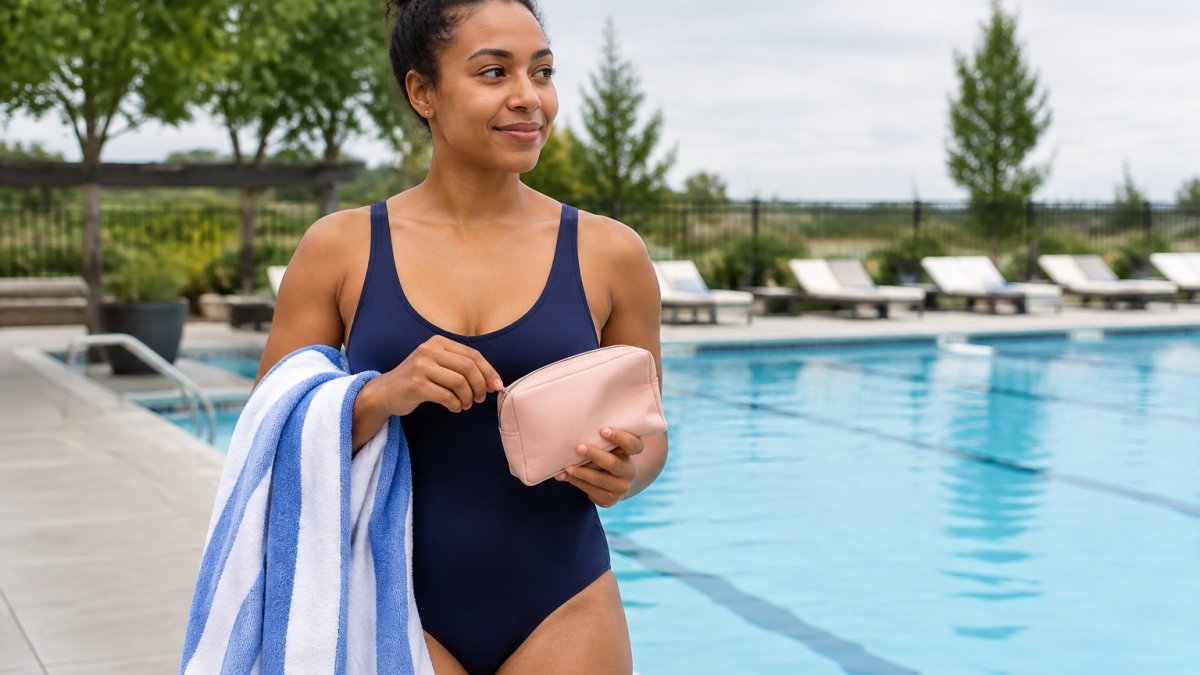
- Pack a small swim pouch. One dry product, a spare pair of underwear, a small towel, and a resealable bag for wet swimwear fit in a zippered bag that lives in your gym bag.
- Choose dark or patterned swimwear on heavy days. It’s a simple confidence boost, and it hides the occasional spot.
- Skip the pad. A regular pad absorbs pool water instantly and becomes useless within seconds.
- Use the bathroom right before you swim. Emptying your bladder and, if you use a cup or disc, emptying the product reduces the chance of discomfort and leaks in the water.
During Your Swim
Most people notice little or no leakage while actually submerged, because hydrostatic pressure presses gently against the vaginal opening and flow tends to stay put. The riskiest moments are transitions: standing up in the shallow end, climbing out of the pool, or toweling off, when that pressure releases and flow can move suddenly. If you’re on a heavy day, plan to head to the locker room or bathroom soon after you exit the water rather than lingering in a wet swimsuit.
After Your Swim
Change out of your swimsuit promptly and swap to a dry product or period underwear. Rinse your swimsuit in cool water and let it dry fully before the next wear. If you use a cup or disc, empty and wash it with mild soap and water, then reinsert or store it in its pouch. A warm shower after swimming is a good habit for anyone, and it’s especially welcome on heavier days.
Watch out: if you develop fever, rash, unusual discharge, or sudden illness after swimming with a tampon in, remove it and seek medical care promptly.
Menstrual Cup for Swimming: Reusable Coverage That Stays Put
A menstrual cup is a reusable option that many people use for swimming. The cup sits in the vaginal canal and collects blood rather than absorbing it, so pool water never mixes with your flow. Once it’s seated correctly, you can swim, float, and tread water without thinking about it.
Fit is everything. The Viv for Your V small cup has a ring stem that makes removal easier for beginners, and the Saalt Soft cup is a good middle-ground pick for comfortable, leak-free wear. If your flow runs heavy, the Viv for Your V large cup holds more between changes. An applicator and sterilizer kit can make the learning curve gentler.
Watch out: a cup left in longer than the manufacturer’s recommended wear time raises the risk of irritation and, rarely, more serious infection. Empty it before and after your swim rather than leaving it in all day.
Menstrual Discs: A Comfortable Option for Pool and Beach Days
Menstrual discs sit higher than cups, and many people find them comfortable enough to forget about. For swimming, some people prefer their low profile.
Beginners often do better with a disc that has a loop tab for easy removal. The Liora disc set includes a small and a large size so you can find your fit, and the YTYOMUR disc set offers a leakproof design in two sizes. On heavy days, plan to empty yours before you swim and again afterward.
Best for: people who find cups uncomfortable or who want a low-maintenance option for light to medium flow.
Skip if: your flow is very heavy and you won’t have a private place to empty and reinsert.
Tampons for Swimming: What to Know Before You Dive In
Tampons are a familiar option for many people, and they can be used when swimming. A tampon sits inside the vagina and absorbs flow at the source, so water doesn’t reach it.
The limitations are real. A tampon’s string can wick a little water, which some people find uncomfortable, and a saturated tampon offers no protection once you’re out of the water. On heavy days, you may need to change right after your swim.
Never leave a tampon in longer than the package directs, and always remove the last one of the day. If you develop fever, rash, or sudden illness while using a tampon, remove it and seek medical care promptly.
Period Swimwear: Leakproof Swimsuits and Swim Bottoms
Period swimwear is a swimsuit or swim bottom with a built-in absorbent layer that some people use on light-flow days. You pull it on like regular swimwear, and the absorbent layer handles light flow while the outer fabric stays dry.
Period swimwear works best as a backup or a light-flow solution, and it needs rinsing and washing after each swim. For teens or anyone new to periods, a leakproof swimsuit removes a lot of anxiety: no insertion, no timing worries, and no supplies to carry. Pair it with a cup or tampon on medium days if you want extra peace of mind.
Why Regular Pads and Waterproof Pad Claims Fall Short
A regular pad is the wrong tool for water. It’s designed to absorb fluid, and pool or ocean water is fluid, so a pad saturates almost immediately and stops protecting you. It also swells, shifts, and becomes visible under a wet swimsuit.
Waterproof or reusable pad claims deserve skepticism, and no external pad is a reliable choice for swimming.
If you prefer external protection, period swimwear is the better answer. If you want to swim without interruption, an internal product is the practical choice. Save the pads for dry land.
Hygiene, Change Timing, and Comfort for Every Body
Hygiene around swimming is simple: change products close to swim time, rinse your body after you get out, and wash reusable products thoroughly between uses. The Shewash feminine hygiene wash is formulated for sensitive skin and suitable for daily use.
Around a swim, empty a cup or disc before you get in and again when you’re done. Tampons should be changed within the package time frame, and always after a swim on heavy days.
Comfort is personal, and not everyone wants or can use an internal product. If insertion is painful, if you have a disability that makes internal products difficult, or if you simply prefer not to, period swimwear plus a well-timed swim is a perfectly good plan.
| Product | Water Performance | Best For | Limitations |
|---|---|---|---|
| Menstrual cup | Excellent, collects at source | Most flows, active swimmers | Learning curve, needs emptying |
| Menstrual disc | Very good, low profile | Light to medium flow | Lower capacity |
| Tampon | Good when fresh | Familiar users, short swims | String wicks water, timing |
| Period swimwear | Good for light flow | Teens, non-internal users | Not for heavy days |
| Regular pad | Poor, absorbs water | Dry land only | Useless in water |
Frequently Asked Questions
What can I use for swimming when I’m on my period?
Internal options work best because they sit inside the body and hold blood rather than absorbing pool water. A menstrual cup or disc collects flow, and tampons are a familiar disposable choice. Regular pads absorb water and swell, so they are not suited to swimming. Match the product to your flow: lighter days pair well with period swimwear, heavier days with a cup or disc sized for your flow.
Can you swim with a pad on?
A regular pad is not designed for swimming. The absorbent core soaks up pool or ocean water, the adhesive weakens, and the pad becomes heavy and prone to shifting or leaking. Some pads are marketed as waterproof, but a pad sits outside the body where water reaches it directly, so the claim rarely holds up in practice. If you prefer external protection, period swimwear is the better choice because it is built into the garment and stays in place while you move.
How do you change period products after swimming?
Rinse off and change within a reasonable window after you leave the water. Wash your hands, then remove your cup, disc, or tampon and empty or dispose of it as directed. Rinse a reusable cup or disc with clean water and reinsert, or store it in its carry bag until you can wash it properly. Tampons should be changed every 4 to 8 hours, so plan around your swim time. Carry a small pouch with a spare product, wipes, and a resealable bag in your gym bag or beach tote.
Are period swimsuits suitable for swimming?
Period swimwear is one option some people use for swimming on light-flow days. Rinse the garment after use and follow its care label.
How do female swimmers manage their periods during practice?
Most swimmers rely on a menstrual cup, disc, or tampon during practice because these stay in place through laps, turns, and starts. Insert the product shortly before you get in the water and empty or change it right after. Keep a small kit in your swim bag with a spare product, a pouch, and a change of swimwear. Tracking your cycle helps you anticipate heavy days and plan around them. If you feel discomfort, unusual odor, or irritation, stop using the product and talk with a healthcare professional.
Swimming on your period doesn’t have to mean sitting out. The right period products for swimming, chosen for your flow and your comfort, make a pool day feel ordinary. Explore EVE’s menstrual cups and discs to find a reusable option that fits your body, and pair it with our sensitive-skin intimate wash for a fresh, confident swim. Get started with EVE and build a swim bag that’s ready for any day of your cycle.






