

Table of Contents
- Postpartum Care Essentials: What You Actually Need
- High-Absorbency Maternity Pads for Heavy Postpartum Bleeding
- Disposable Underwear and Postpartum Recovery Kits
- Postpartum Care for Sensitive Skin
- Cooling Pads and Perineal Comfort Products
- How Long to Use Postpartum Pads and Recovery Timeline
- Vaginal Birth Versus C-Section Recovery Supplies
- Building Your Postpartum Supplies Budget
- Frequently Asked Questions
Last Updated: October 17, 2026
Postpartum Care Essentials: What You Actually Need
The first two weeks after birth are unlike anything else. Your body is healing, and the bleeding can be heavy and unpredictable. This is where postpartum care essentials make all the difference.
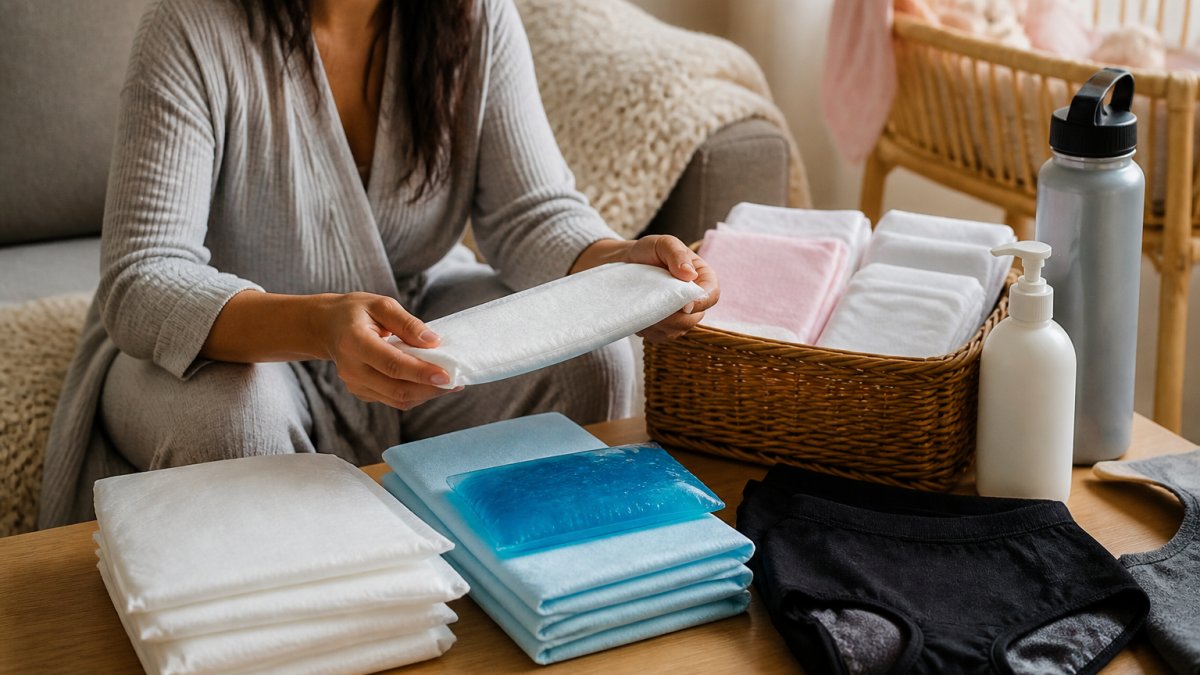
Standard pads won’t cut it. You need postpartum care essentials designed for the heavy flow and sensitivity that comes with healing, because the products you choose affect your comfort, confidence, and recovery timeline.
The first 2 weeks after birth require heavy-duty pads designed for postpartum bleeding, not regular menstrual pads. Standard pads absorb far less and shift easily, leaving you exposed when you need protection most.
This guide covers what actually works for postpartum recovery, broken down by product type and delivery method, whether you’re preparing for a vaginal birth or C-section.
High-Absorbency Maternity Pads for Heavy Postpartum Bleeding
Heavy postpartum bleeding is normal. Many new mothers change pads every 1-2 hours in the first days after birth. This is why maternity pads exist, they’re longer, wider, and far more absorbent than regular sanitary pads.
The difference matters. A standard period pad can’t handle the volume and consistency of postpartum flow, so you’ll leak through and feel anxious. Maternity pads eliminate that stress.
LuvLap Extra Absorbent Maternity Pad
The LuvLap Extra Absorbent Maternity Pad is built for the heaviest days right after birth. A pack of 10 pads costs $2.08 and covers the critical first 0-2 weeks when flow is most intense. These pads are longer and wider than standard options, with ultra-soft material that won’t irritate sensitive postpartum skin.
Order your postpartum pads at least 2 weeks before your due date. Shipping delays are common in the final weeks of pregnancy, and you don’t want to be searching for pads while recovering.
Evereve Maternity Pads XXXL+ 420mm
For the heaviest flow, the Evereve Maternity Pads XXXL+ 420mm offer the widest front-to-back leakproof coverage available. At $2.08 per pack of 10, they’re the same price as standard maternity pads but with significantly more protection. The 3X absorbency and extreme flow protection make them ideal for hospital use and the first week at home.
The 420mm length provides wide coverage. Soft and irritation-free material is especially important during postpartum recovery when your skin is sensitive and healing.
Disposable Underwear and Postpartum Recovery Kits
Disposable underwear simplifies postpartum recovery in ways many women don’t anticipate. You won’t worry about staining your favorite underwear, and you can throw them away instead of doing laundry while healing.
Disposable postpartum underwear also comes in larger sizes that accommodate heavy pads without bunching or shifting. The stretch support keeps everything in place, and the seamless design prevents irritation.

Frida Mom Postpartum Underwear Options
Frida Mom makes two options depending on your delivery type. The Frida Mom Postpartum Underwear with disposable boyshort panties costs $4.88 and works well for vaginal births.
For C-section recovery, the Frida Mom Disposable High Waist C-Section Postpartum Underwear at $4.04 per pack of 8 sits above your incision. The breathable, wicking material pulls moisture away from your skin, and the latex-free construction prevents allergic reactions.
If you’re recovering from a C-section, avoid regular or low-rise underwear for at least 2-3 weeks. Pressure on the incision site can slow healing and increase discomfort. High-waist disposable options protect the incision while keeping you dry.
Evereve and Nua Maternity Panties
The Evereve Maternity Period Panties (XXL-XXXL) cost $2.50 per pack of 10 and offer 360-degree leak protection with 3X absorption. These are designed specifically for heavy postpartum bleeding and clots. The full back coverage and snug fit keep everything secure whether you’re resting, nursing, or moving around.
The Nua 360° Comfort Maternity Panties (XXL-XXXL) at $2.29 per pack of 5 are dermatologically tested and 100% toxic-free. They absorb heavy gushes and offer 4X comfort with zero irritation. Both options are soft and breathable.
Postpartum Care for Sensitive Skin
Your perineal area and surrounding skin are sensitive and healing after birth. Products with dyes, fragrances, or harsh chemicals can cause irritation, burning, or delayed healing.
This is where gentle, medicated products become essential. Witch hazel cleanses, cools, and soothes without harsh chemicals, and many hospitals stock witch hazel pads for postpartum patients.
The TUCKS Medicated Cooling Pads with witch hazel cost $7.68 for 100 count and are pH balanced, hypo-allergenic, and dye-free. These pads are particularly helpful for relieving discomfort following childbirth.

Women recovering from vaginal birth who need gentle perineal care without irritation. Also effective for post-surgical recovery and anyone dealing with sensitive anorectal tissue.
For intimate hygiene during early recovery, Extra Large Body Wipes for Adults at $29.99 for 80 count offer no-rinse cleansing. These ultra-thick disposable wipes are great for postpartum use when you’re not ready for a full shower. They’re soft, gentle, and designed for sensitive skin.
Cooling Pads and Perineal Comfort Products
Cooling brings immediate relief to postpartum soreness.
Cooling products can help reduce discomfort. Some women alternate cooling pads during the day with soothing products like witch hazel in the evening.
The TUCKS Medicated Cooling Pads serve double duty, they cool and soothe with witch hazel.
Assembling your own kit with products from Eve llc lets you customize based on whether you’re recovering from vaginal birth or C-section.
How Long to Use Postpartum Pads and Recovery Timeline
Days 1-3: Flow is heaviest and often bright red, with small clots. Change maternity pads every 1-2 hours.
Days 4-10: Flow typically lightens to a pinkish or brownish color. You may stretch pad changes to every 3-4 hours.
Weeks 2-4: Flow continues to taper.
Weeks 4-6: Light bleeding or spotting is common. A panty liner may be enough.
After 6 weeks: If bleeding has not stopped or has returned to a heavier flow, bring it up with your clinician.
Vaginal birth vs. C-section: how the timeline differs
After a vaginal birth, you may also use cooling pads and witch hazel for the first week or two. After a C-section, lochia still happens, but you are also managing an abdominal incision. High-waist disposable underwear that sits above the incision often stays useful longer than pads alone, and you may need to avoid anything that presses on the site for 2-3 weeks.
Safe use of pads, cooling products, and cleansing bottles
- Change pads frequently, every 1-2 hours in the first days, to reduce irritation and infection risk.
- Follow the label on witch hazel pads and cooling products. Do not leave a cooling pad on longer than directed.
- If you use a peri bottle, use warm water and pat dry gently; avoid harsh soaps or douching unless your clinician recommends it.
- Stop using any product that causes burning, rash, or increased pain, and check with your clinician.
Warning signs: when to seek medical care
Self-care supplies support recovery, but they are not a substitute for medical attention. Contact your clinician promptly if you notice:
- Bleeding that soaks through a pad in an hour or less for two hours in a row
- Clots larger than a golf ball
- Foul-smelling discharge
- Fever of 100.4°F or higher
- Increasing pain, redness, or swelling at the incision or perineal area
- Dizziness, fainting, or shortness of breath
These signs can indicate complications that need prompt evaluation. When in doubt, call your clinician, do not wait.
Keep a small notebook or phone note of pad changes and symptoms for the first week. It makes it easier to answer your clinician’s questions and spot changes early.
Vaginal Birth Versus C-Section Recovery Supplies
Your delivery method affects which postpartum care essentials matter most. Both require heavy-duty pads, but the extras differ.
Vaginal Birth Recovery:
- Heavy-absorbency maternity pads (essential)
- Disposable boyshort or regular underwear (comfortable)
- Witch hazel pads or cooling pads (for perineal soreness)
- Extra Large Body Wipes (for gentle cleansing)
C-Section Recovery:
- Heavy-absorbency maternity pads (essential)
- High-waist disposable underwear (protects incision)
- Abdominal compression belt (supports healing)
- Witch hazel pads (for comfort)
- Gentle body wipes (for areas away from incision)
The PLETHEON Abdominal Belt at $3.12 provides firm yet gentle compression for C-section recovery. It supports your abdominal muscles and lower back. Many women wear it under clothes for all-day support. The breathable, skin-friendly fabric prevents irritation during recovery.
For C-section mothers, high-waist underwear is non-negotiable. Regular underwear puts pressure on your incision; high-waist options sit above it and keep you protected without pressure.
Building Your Postpartum Supplies Budget
A postpartum kit does not need to be expensive, but it does need to be prioritized. Cover the essentials first, then add comfort items as your budget allows.
Essentials vs. optional: what to buy first
Essentials (buy before your due date):
- High-absorbency maternity pads: plan for 2-3 packs of 10 for the first two weeks. Many people use 1-2 packs per week early on.
- Disposable underwear: 1-2 packs. High-waist options are especially helpful after a C-section.
- Peri bottle or cleansing wipes: 1. A peri bottle is reusable; wipes are convenient for the first days.
- Witch hazel pads or cooling pads: 1 pack. These are comfort items but many people find them worth having on hand.
Optional (add if budget allows):
- Abdominal belt or compression garment (C-section recovery)
- Extra-large body wipes for no-rinse cleansing
- Additional cooling pads for the first week
- A small organizer or caddy to keep supplies within reach
Timing your purchases
Order essentials at least two weeks before your due date so shipping delays do not leave you short. Keep a small stash in the bathroom and another in your hospital bag. After the first week, reassess: if you are changing pads less often, you may not need to reorder maternity pads, switch to overnight or heavy-flow pads instead.

Reusable vs. disposable
Disposable underwear and pads are convenient and reduce laundry during early recovery. Reusable options, such as period underwear designed for heavy flow, can be cost-effective over time, though they mean laundry and higher upfront cost. A common approach is disposables for the first week or two, then reusable options as bleeding lightens.
Budget-friendly tips
- Use hospital-provided supplies while you are there, many hospitals send you home with a starter kit.
- Skip products you will not use. A peri bottle and pads cover the basics; everything else is comfort.
Prioritize maternity pads and disposable underwear first. These two items handle the bulk of postpartum bleeding and comfort. Add cooling pads and witch hazel if budget allows, but do not skip the foundation products. Build your kit at least two weeks before your due date and reassess after the first week.
Frequently Asked Questions
What feminine care supplies do you need after giving birth?
After birth, you’ll need high-absorbency maternity pads for heavy postpartum bleeding, disposable or comfortable cotton underwear, perineal cleansing products, cooling pads for soreness, and a perineal rinse bottle for gentle hygiene. The exact supplies depend on whether you had a vaginal birth or C-section. High-absorbency maternity pads are essential for the first 1-2 weeks when bleeding is heaviest. We recommend having multiple packs on hand to change every 1-2 hours initially.
How long do you need to use postpartum pads?
Postpartum bleeding typically lasts 4-6 weeks, though the heaviest flow occurs in the first 1-2 weeks. High-absorbency maternity pads are designed for the first two weeks when you’ll change them frequently. After that, you may transition to regular pads or lighter options as bleeding decreases. Every recovery is different, so listen to your body and consult your healthcare provider if bleeding seems unusually heavy or prolonged.
Which postpartum products are suitable for sensitive skin?
For sensitive skin, choose products labeled hypoallergenic, dye-free, and fragrance-free. Our postpartum care for sensitive skin includes soft, breathable materials that reduce friction and irritation. Witch hazel pads like TUCKS offer soothing relief without harsh chemicals. Disposable underwear with breathable fabric and stretch support minimize chafing. Always patch-test new products on a small area first, and discontinue use if irritation occurs. Consult your healthcare provider if sensitivity persists.
Are disposable underwear useful after childbirth?
Yes, disposable underwear is highly practical after childbirth. They eliminate worry about staining your regular clothes, provide seamless comfort, and reduce friction on sensitive areas. High-waist options offer extra coverage and support, especially after C-section recovery. Disposable underwear allows you to focus on healing without laundry stress. Most mothers find them essential for the first 2-4 weeks, though individual recovery timelines vary.
When should I ask a healthcare professional about postpartum symptoms?
Contact your healthcare provider immediately if you experience heavy bleeding that soaks more than one pad per hour, large blood clots, signs of infection (fever, chills, foul-smelling discharge), severe perineal pain unrelieved by comfort products, or signs of depression or anxiety. These may indicate complications requiring medical attention. Regular postpartum check-ups, typically at 6 weeks, give you an opportunity to discuss recovery concerns with your provider.





