

Table of Contents
- Why At-Home STI Testing Matters for Your Sexual Health
- Who Should Consider At-Home STI Testing
- What STIs Can At-Home Tests Detect
- How At-Home STI Testing Works: Sample Collection Methods
- At-Home STI Test Accuracy: What You Need to Know
- STI Test Window Period: When to Test After Exposure
- What to Do After a Positive STI Test
- Choosing a Reliable At-Home STI Test Kit
- Frequently Asked Questions
Last Updated: October 15, 2026
Why At-Home STI Testing Matters for Your Sexual Health
At-home STI testing gives you control over your sexual health in a way that feels private, convenient, and judgment-free. Testing for sexually transmitted infections has never been easier, you collect your sample at home, mail it to a lab, and get confidential results online. No waiting rooms.

The reality is this: many people with sexually transmitted infections don’t know they have them. Infections like chlamydia and gonorrhea often cause no symptoms at all, which means untreated infection can lead to serious complications over time. Early detection changes everything.
We at Eve llc believe that sexual health shouldn’t feel shameful or complicated. That’s why we’re committed to making testing accessible, affordable, and discreet.
Who Should Consider At-Home STI Testing
At-home STI testing isn’t just for people who think they’ve been exposed. It’s for anyone who’s sexually active, wants to know their status, or prioritizes their health.
You should consider testing if you’re starting a new sexual relationship and want to establish a baseline before becoming intimate with a partner.
People with certain health conditions sometimes experience symptoms that can overlap with STI symptoms, making testing even more valuable for clarity. Postpartum women and anyone recovering from surgery may also benefit from screening as part of their overall health recovery.
The honest truth: if you’re sexually active, you could benefit from knowing your status. There’s no shame in that. Testing is preventive care, just like getting your blood pressure checked or scheduling a routine physical.
What STIs Can At-Home Tests Detect
Modern at-home STI test kits can screen for many of the most common sexually transmitted infections. Most comprehensive kits test for chlamydia and gonorrhea, which are among the most frequently diagnosed infections.

Some at-home kits focus on specific infections. For example, rapid HIV tests detect HIV 1 and HIV 2 through blood or oral fluid samples. Other kits are broader, allowing you to screen for multiple infections with a single collection.
The specific infections included depend on the kit you choose. This is why reading the product details matters, you want to know exactly what you’re being tested for.
It’s important to understand that no single test catches every possible infection, and some infections have window periods where they won’t show up on a test even if you’re infected.
How At-Home STI Testing Works: Sample Collection Methods
At-home STI testing follows a straightforward process: you collect a sample at home using the kit’s instructions, package it securely, and mail it to a laboratory using the prepaid shipping materials included. The lab analyzes your sample and sends results to a secure online portal, usually within a few days.
The sample collection method depends on which infection is being tested and which kit you’re using. Different infections require different sample types, and each has a specific collection technique to ensure accuracy.
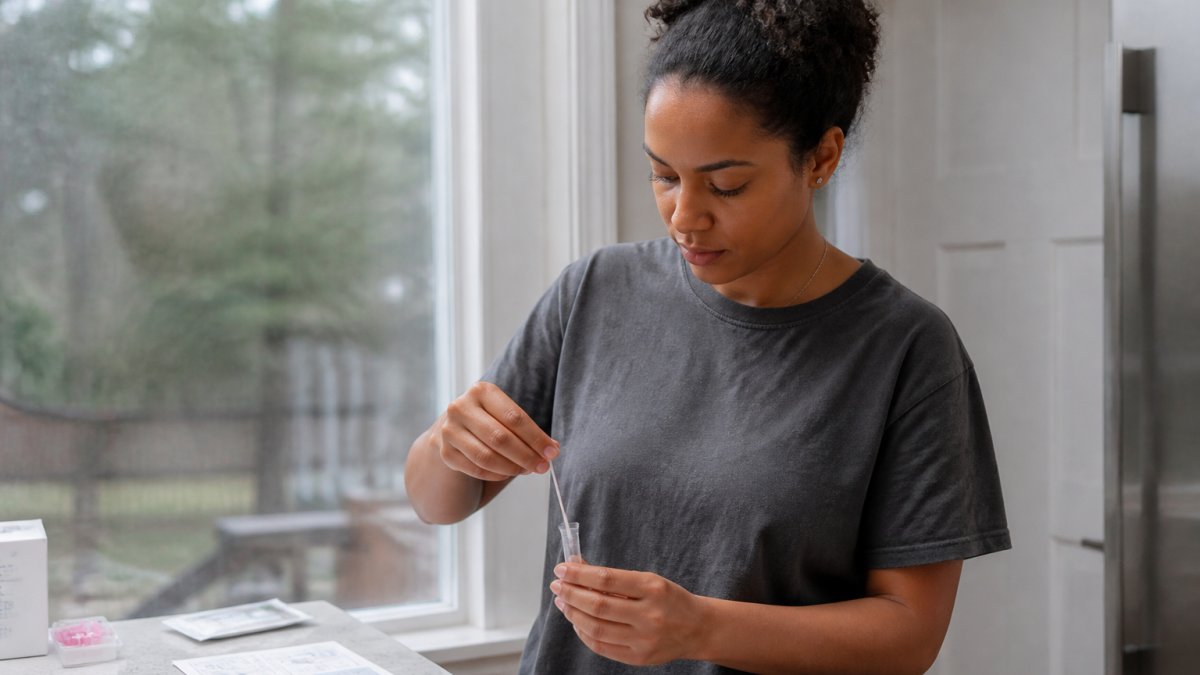
Urine Sample Collection
Urine samples are among the most common collection methods for at-home STI testing. They’re straightforward and non-invasive, making them accessible for most people.
For a urine sample, you’ll typically collect the first-catch urine, the initial stream when you urinate. This concentration of cells and bacteria is what the lab needs for accurate testing. The kit provides a collection cup or tube, and you’ll follow the included instructions carefully. Some kits ask you to collect a specific volume, so pay attention to the measurement markings.
After collection, you’ll seal the sample and place it in the biohazard bag provided. The kit then goes into the prepaid shipping envelope. Urine samples are stable during shipping, which makes them convenient for at-home testing. Most labs receive and process urine samples within 2-3 business days of arrival.
Blood Sample Collection
Blood samples are typically collected using a finger-prick method included in the kit. You’ll use a small lancet to prick your fingertip, collect a few drops of blood on the collection card or into a tube, and let it dry according to the instructions.
Finger-prick collection is quick, usually just a few seconds of minor discomfort.
Blood samples are used for testing infections like HIV, syphilis, and hepatitis. The dried blood spots are stable during shipping and can be analyzed by the lab within a few days. Some people prefer blood testing because it can detect certain infections earlier than other sample types.
Swab Sample Collection
Swab samples involve using a sterile applicator to collect cells from a specific area. Depending on the infection being tested, this might be a urethral swab, vaginal swab, rectal swab, or oral swab.
For a vaginal or urethral swab, you’ll insert the applicator to the depth specified in your instructions, usually just a couple of inches, and gently rotate it to collect cells. The goal is to gather enough cellular material without causing discomfort. Rectal and oral swabs involve similar techniques: gentle insertion or swabbing of the area, with careful attention to the kit’s specific instructions.
After collection, you’ll place the swab into the transport tube provided, seal it, and prepare it for shipping. Swabs are stable during transit and provide accurate samples for lab analysis. Most labs process swab samples within 2-3 business days.
At-Home STI Test Accuracy: What You Need to Know
At-home STI tests are generally reliable when used correctly, but like all medical tests, they have limitations.
Most at-home tests for common infections like chlamydia and gonorrhea have sensitivity rates in the range of 85-99%, depending on the test and the sample type.
What matters most is understanding that no test is 100% accurate.
This is why timing matters. If you test during the window period, the time between infection and when the test can detect it, you might get a false negative result.
If you test positive, confirmatory testing through a healthcare provider is important. A positive result from an at-home test should always be followed up with clinical confirmation and professional guidance on treatment options.
STI Test Window Period: When to Test After Exposure
The window period is the time between when you’re infected and when a test can reliably detect that infection.
Window periods vary significantly depending on the infection and the test type. For chlamydia and gonorrhea, the window period using nucleic acid amplification tests (the most common method) is typically 1-2 weeks. For syphilis, it can be 3-4 weeks before antibodies are detectable.
This is why many healthcare providers recommend testing at specific intervals if you’ve had a potential exposure. An initial test might be followed by a repeat test 2-4 weeks later to account for window periods.
The timing of your test directly affects its reliability. Testing too early gives you a false sense of security. Waiting until you’re past the window period for the infections you’re concerned about ensures more accurate results.
What to Do After a Positive STI Test
Getting a positive result can feel overwhelming, but it’s important to remember that sexually transmitted infections are treatable and manageable. The first step is confirming the result with a healthcare provider who can do clinical testing and discuss treatment options with you.
Many STIs are curable with antibiotics when caught early. Others, like HIV and hepatitis, are manageable with modern medications that allow people to live long, healthy lives.
Partner notification is also important. If you’ve tested positive, your sexual partner or partners should know so they can get tested and treated if needed.
After treatment, follow-up testing confirms that the infection has been cleared. Depending on the infection and the treatment, this might happen a few weeks after you complete medication. Your healthcare provider will guide you on when and how to get tested again.
Choosing a Reliable At-Home STI Test Kit
Not all at-home STI test kits are created equal.
Reputable kits come with detailed, easy-to-follow instructions for sample collection. They include prepaid shipping with biohazard bags and clear labeling.
At Eve llc, we recommend the At-Home STI Test Kit, Discreet Personal Health Screening for comprehensive screening. This kit includes clear step-by-step instructions, all necessary collection materials, and secure result delivery through a confidential online portal.
We also offer the Microsidd STI Test Kit Combo for those looking for a comprehensive screening option, and specific testing like the Trustline HIV 4th Generation Rapid Home Self-Test Kit for focused HIV screening.

When evaluating any at-home test kit, verify that the company is transparent about laboratory partnerships, processing times, and how results are delivered. Avoid kits with vague product descriptions or unclear shipping processes.
Taking charge of your sexual health starts with knowing your status. We at Eve llc are here to support your journey toward confident, informed sexual health with products designed for your privacy and peace of mind. CDC sexual health screening recommendations encourage regular testing as part of preventive care, and we make that care accessible through discreet, reliable options.
Frequently Asked Questions
How accurate are at-home STI tests?
At-home STI test accuracy depends on the specific infection and test type. Blood-based tests for HIV, hepatitis B, and syphilis typically achieve 99% accuracy or higher when performed correctly. Urine and swab tests for chlamydia and gonorrhea are also highly accurate but may have slightly lower sensitivity if samples aren’t collected properly. Following instructions carefully and using tests from reputable manufacturers significantly improves reliability. If you receive an unexpected result, confirmatory testing through a healthcare provider is recommended.
When should I test after a possible STI exposure?
The window period, the time between exposure and when a test can detect an infection, varies by infection and test type. HIV may take 18-45 days to show up on standard tests, though newer fourth-generation tests can detect it within 18 days. Chlamydia and gonorrhea can usually be detected within 1-2 weeks. Syphilis may take 3-6 weeks. If you think you’ve been exposed, contact a healthcare provider who can recommend the right timing and test type for your situation.
What STIs can at-home tests detect?
At-home STI tests can screen for many common infections, including chlamydia, gonorrhea, HIV, syphilis, hepatitis B, hepatitis C, and trichomoniasis. Some kits offer comprehensive panels that test for multiple infections at once, while others focus on specific ones. The infections included depend on the test kit you choose. Check the product description carefully to see which infections are covered, and talk to a healthcare provider if you’re unsure which test is right for your needs.
What should I do if my at-home STI test is positive?
A positive result means you should schedule an appointment with a healthcare provider right away for confirmatory testing and professional guidance. They can discuss treatment options, which are available for most STIs, and help you notify partners who may need testing. Don’t panic, many STIs are highly treatable with antibiotics or antivirals when caught early. Avoid sexual contact until you’ve consulted with your provider and received treatment. Your healthcare provider can also help you understand what happened and how to prevent future infections.
How does at-home STI testing work?
At-home STI testing is straightforward: you order a kit, collect a sample (urine, blood, or swab) following the included instructions, seal it in the provided container, and mail it to a laboratory using prepaid shipping. The lab analyzes your sample and sends results through a secure online portal, usually within a few days. Some kits offer rapid results in minutes, while others take longer but may be more comprehensive. Always read the instructions carefully to ensure accurate sample collection.
Can an at-home STI test miss an infection?
Yes, false negatives can happen, especially if you test during the window period before an infection becomes detectable. Improper sample collection also reduces accuracy, following instructions precisely is critical. Some people may also have low levels of infection that don’t show up on initial tests. If you have symptoms or ongoing concerns despite a negative result, talk to a healthcare provider about repeat testing or professional evaluation. They can determine whether additional testing or a different test type is appropriate.
Is at-home STI testing confidential?
Yes, at-home STI testing offers significant privacy advantages. You collect samples in your own space, and results are delivered through secure online portals rather than in person. Most reputable test providers use encryption and strict confidentiality policies to protect your information. However, review the privacy policy of any test provider before ordering. If you’re concerned about billing appearing on insurance or credit card statements, ask about payment options that protect your privacy.





